Javelina Jundred: 100 Miles in Loops, Dressed Up for Halloween
In Arizona, hundreds of runners cover 100 miles by running in circles, often in costume. Around Halloween, the desert turns into a 30-hour party. Welcome to the Javelina Jundred.
By the PacePoster desk · · 3 min · 8 sources
01A joke that got out of hand
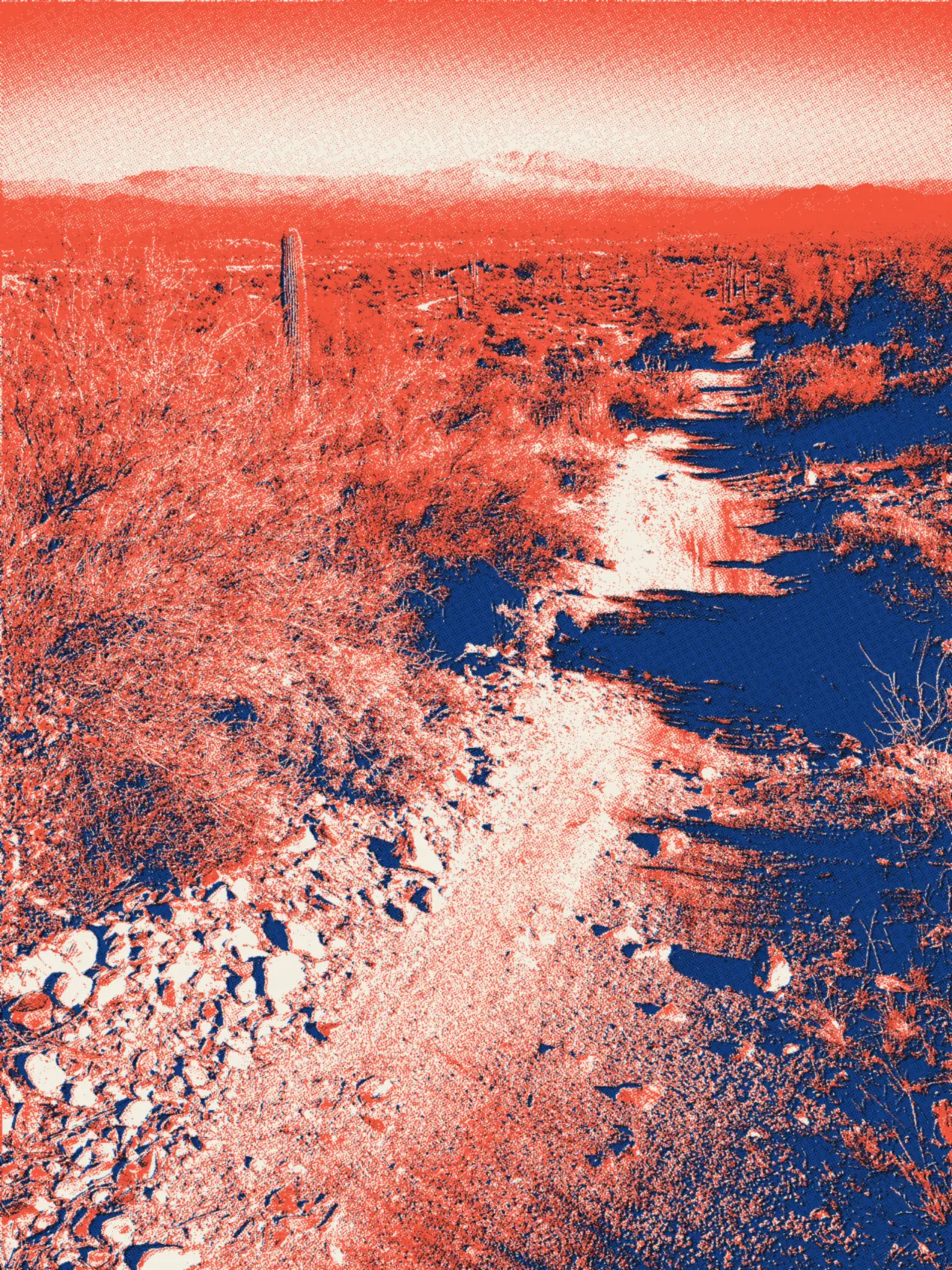
It all started with a prank. In 2003, Phoenix runner Geri Kilgariff founded the race. “The idea started out as a joke,” she says on the organizer's website: running the Pemberton Trail with a friend, they found it funny to imagine a 100-mile race in several loops. The “Javelina Hundred” became the “Jundred,” for laughs. She expected about fifty runners, she says. She got 180 entries.
The joke has had time to grow: in 2025, 491 runners finished the 100 miles, according to the organizers.
02One hundred miles, one camp
The principle is simple and a little cruel: every loop starts again from the same spot, the headquarters, nicknamed the “Javelina Jeadquarters.” The 100 miles is 5 loops of about twenty miles in McDowell Mountain Regional Park, near Fountain Hills. On the course, aid stations have names that set the tone, like Jackass Junction.
Start: Saturday at 6 a.m. Cutoff: 30 hours. One more loop, and you pass your own tent again.
The draw for me is to see what my limits are and see what I can run.
03Jalloween
The organizers bill it as the “original costumed 100 mile trail run party” and call the weekend “Jalloween.” A prize rewards the best costume. For the 31 km night run, the instruction fits in one sentence: “Be in costume!” The rules also state that the race is rated R and that full-frontal nudity is not allowed. Everything is covered.
04Bacon, eggs and mermaids
The organizers' recap of the 2016 edition gives an idea. More than 300 tents around camp. A pacer dressed as bacon, his wife as eggs. A Forrest Gump (“Run Forest, Run!”). The “Beer Fairy,” who kept the costume on for all 100 miles. And the Big Bad Wolf in a granny's nightgown, crowned best male costume.
In 2023, Outside magazine ran into Barbies, Taylor Swifts and a few heavy-metal rock stars; the costume contest went to the “Montana Mermaids.” “There's so many runners at this race that you're constantly high-fiving people,” Emily Toia told Cronkite News in 2015.
05Behind the costume, a real 100 miles
Don't be fooled by the glitter. On these almost shadeless trails, “you'll be bone dry in two to three miles in the heat of the day,” Patrick Reagan, then the course record holder, warned Trail Runner in 2022. In 2016, according to the organizers' recap, 574 runners started the 100 miles, in 95 °F (35 °C) heat under a cloudless sky: only 52% made it to the finish. That year Courtney Dauwalter won the 100 km. The current records, as listed by the organizers: 12 hr 10 min 12 sec for Will Murray, 13 hr 31 min 47 sec for Tara Dower.
Jamil Coury, race director since 2008 and founder of Aravaipa Running the following year, told Cronkite News what draws him to run so far: “The draw for me is to see what my limits are and see what I can run.”
Sources for this story (8)
Every fact was cross-checked in at least two independent sources. Where they disagree, the story says so.
- Javelina Jundred — Aravaipa Running (organisateur)
- Javelina Jundred 2016 recap — Aravaipa Running (Melia Coury, 2016)
- 30 Hours at Javelina Jundred, the Burning Man of Trail Running — Outside (2023)
- The Javelina Jundred Turns 20 This Year, And It's Still R-Rated — Trail Runner (2022)
- Javelina Jundred brings Halloween spirit to 100-mile run — Cronkite News, Arizona PBS (Zuriel Loving, 2015)
- Courtney Dauwalter, Blind Perseverance at RRR100 — Ultrarunner Podcast (Eric Schranz, 2017)
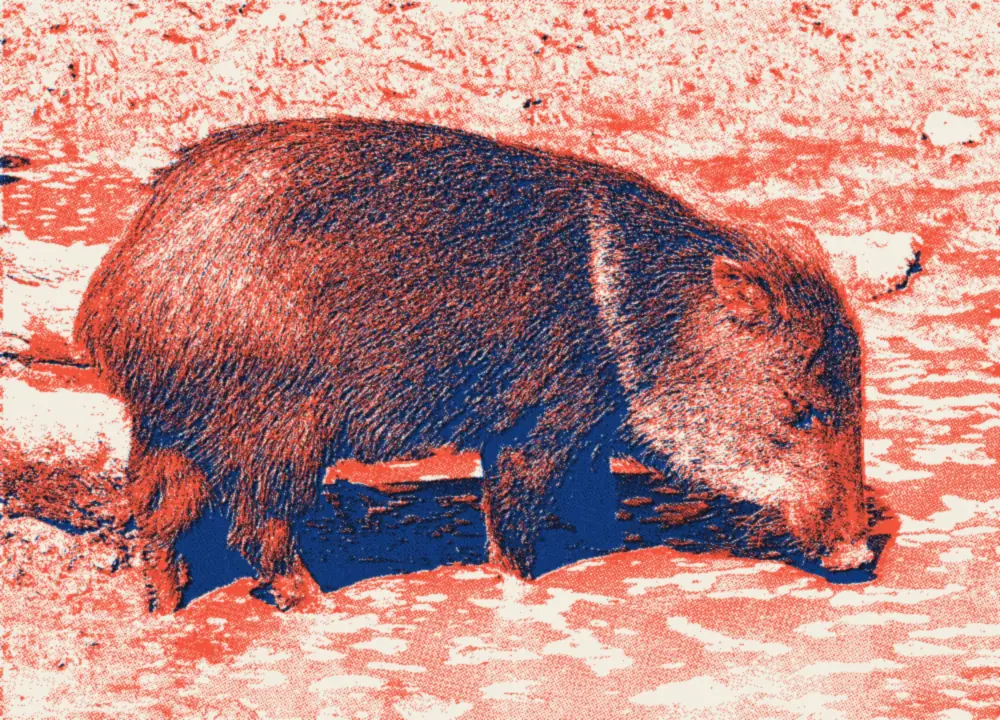
- Javelina — Saguaro National Park, National Park Service
- API Wikimedia Commons — Pemberton Trail.jpg et Tayassu tajacu.jpg
Read next
The whole journal → No. 48
Vasaloppet: 90 km on Skis in the (Supposed) Footsteps of a King
A tradition says that in early 1521, skiers from Mora caught up near Sälen with a fugitive named Gustav Vasa, to bring him back to lead a revolt. Four centuries later, a journalist turned it into a race. It is still run, with blueberry soup. That is the short version of Vasaloppet history.
 No. 49
Birkebeinerrennet: A Backpack in Memory of a Baby King
Birkebeiner history starts in the winter of 1206, in Norway: two skiers cross the mountains carrying a child who will become king. Since 1932, thousands of skiers have retraced the crossing with a pack on their back, in memory of that child. It weighed 5.5 kg, then 3.5 kg. For 2027, it will be 2 kg.