Vasaloppet: 90 km on Skis in the (Supposed) Footsteps of a King
A tradition says that in early 1521, skiers from Mora caught up near Sälen with a fugitive named Gustav Vasa, to bring him back to lead a revolt. Four centuries later, a journalist turned it into a race. It is still run, with blueberry soup. That is the short version of Vasaloppet history.
By the PacePoster desk · · 4 min · 20 sources
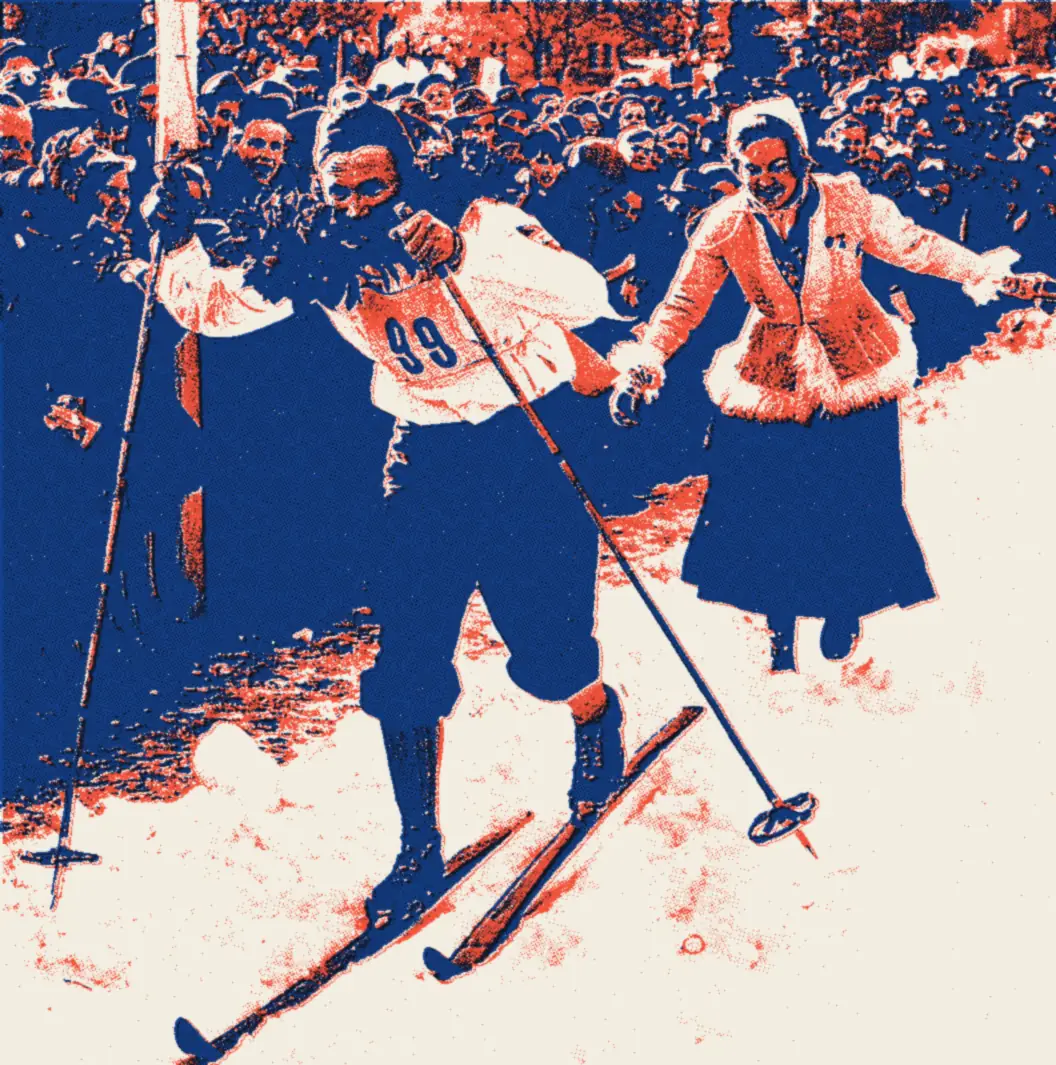
01A fugitive and some skiers
It is 1520. Gustav Eriksson Vasa, 24, has escaped from captivity in Denmark. In November, in Stockholm, the Danish king Christian II has dozens of nobles and notables executed: the “Stockholm Bloodbath.” Gustav's father is among the victims. Gustav looks for support in Dalarna, the region around Mora.
According to tradition, he calls on the people of Mora to take up arms, gets nothing, and heads off toward Norway. Mora changes its mind and sends skiers after him, who catch him near Sälen. The account of the chase gives them two names, Lars and Engelbrekt. Gustav returns, Dalarna rises in 1521, and on June 6, 1523, he is elected king. End of the legend. Start of the trouble.
02Legend versus history
Because the oldest written version is late. It is the chronicle of Peder Svart, written around 1560, some forty years after the events. The Vasaloppet itself admits that this account differs. It places the meeting at Lima, not Sälen, and speaks only of “some Dalarna men,” naming no one. And according to the Svenskt biografiskt lexikon, historians see in it a text fed by oral tradition and favorable to the king's image.
In short: Gustav did look for support in Dalarna. Whether he made the journey on skis, and over what distance, belongs to tradition, not established history.
Nobody was thinking of Ernst Alm, who swept past without anyone noticing him
031922: a journalist has an idea
On Friday, February 10, 1922, Anders Pers, born in Mora and editor-in-chief of the Vestmanlands Läns Tidning, publishes an article titled “A national ski race.” In it he proposes a race in memory of Gustav Vasa's flight. The daily Dagens Nyheter backs the idea with 1,000 kronor. On March 5, the club IFK Mora decides to organize a trial race, from Sälen to Mora: finishing at home.

04March 19, 1922: through wet snow
On Sunday, March 19, 1922, 119 skiers start in Sälen, out of 136 or 139 entrants depending on the source. Sleet falls, the organizer says, and the fresh snow freezes under the skis. 117 reach Mora.
The winner is Ernst Alm, 22, from Norsjö, in 7 hr 32 min 49 sec. At Evertsberg, he eats for less time than his rivals and sets off again. “Nobody was thinking of Ernst Alm, who swept past without anyone noticing him,” one of them, Per Erik Hedlund, would recall much later, as quoted by the Vasaloppet. In 2022, according to ProXC Skiing magazine, two of his grandsons re-ran it with equipment close to what was used in 1922, in 13 hr 53 min.
05Today: 15,800 bibs and soup
The Vasaloppet is 90 km, from Sälen to Mora, in the classic style required by the rules. The number of places is capped at 15,800.
At the aid stations, blueberry soup has been there since the first race, according to Isof, a Swedish public institute. Ekströms' version has been served since 1958; before that, blueberries were picked in the summer in Dalarna, the organizer explains. The Vasaloppet says the race burns nearly 8,000 kcal and that the soup, gentle on the stomach, helps you keep going.
Sources for this story (20)
Every fact was cross-checked in at least two independent sources. Where they disagree, the story says so.
- The first Vasaloppet — Vasaloppet (organisateur)
- Det första Vasaloppet — Vasaloppet (organisateur, version suédoise)
- Pre-history — Vasaloppet (organisateur)
- History — Vasaloppet (organisateur)
- Fantastiska fakta, rekord och kuriosa — Vasaloppet (organisateur)
- Vasaloppet (page de course) — Vasaloppet (organisateur)
- Blueberry soup — Vasaloppet (organisateur)
- Vasaloppet — Worldloppet
- Ernst Alm: Long-distance Skiing Legends — ProXC Skiing (Mårten Lång, 18 juillet 2022)
- I Vasaloppets spår : Vasaloppet – vårt äldsta långlopp — Isof, Institutet för språk och folkminnen (agence d'État suédoise)
- I Vasaloppets spår : Anders Pers och gårdsnamn i Dalarna — Isof
- I Vasaloppets spår : Namnen Gustav Vasa och Vasaloppet — Isof
- I Vasaloppets spår : Blåbärssoppa och annan Vasaloppsmat — Isof
- Peder Andreæ (Svart) — Svenskt biografiskt lexikon, Riksarkivet (Gunnar T. Westin)
- Gustav Vasa — Nationalencyklopedin (extrait, article payant)
- Stockholms blodbad — Nationalencyklopedin (extrait)
- The Stockholm Bloodbath of November 1520 — Library of Congress, In Custodia Legis (Elin Hofverberg, 9 novembre 2021)
- Gustavus I. Eriksson — Encyclopædia Britannica 1911 (Wikisource)
- Monarkins historia — Kungahuset (cour royale de Suède)
- API Commons — Mora-Nisse et statue de Zorn
Read next
The whole journal →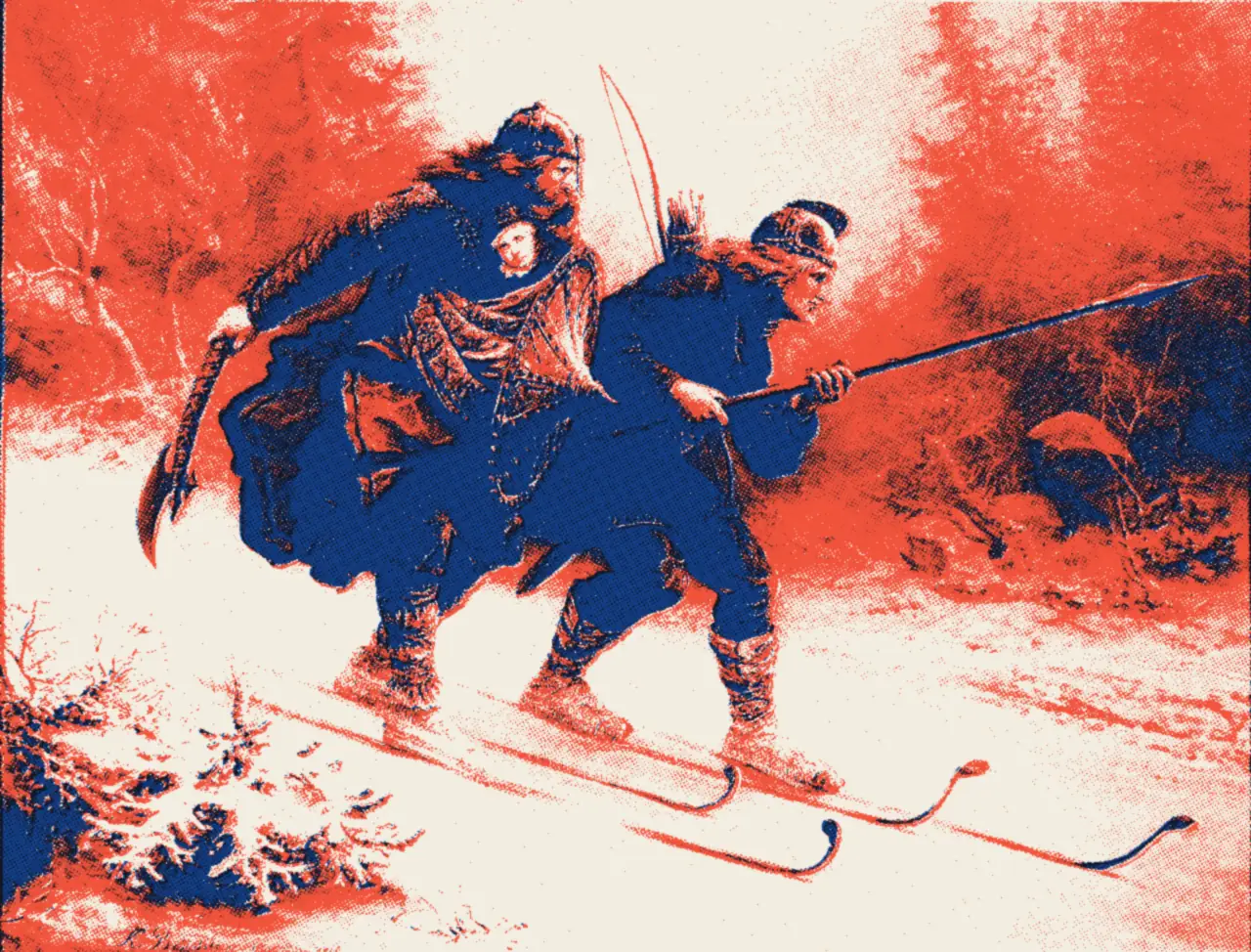 No. 49
Birkebeinerrennet: A Backpack in Memory of a Baby King
Birkebeiner history starts in the winter of 1206, in Norway: two skiers cross the mountains carrying a child who will become king. Since 1932, thousands of skiers have retraced the crossing with a pack on their back, in memory of that child. It weighed 5.5 kg, then 3.5 kg. For 2027, it will be 2 kg.
 No. 11
Médoc Marathon: The World's Longest Marathon, Where the Aid Station Serves Wine
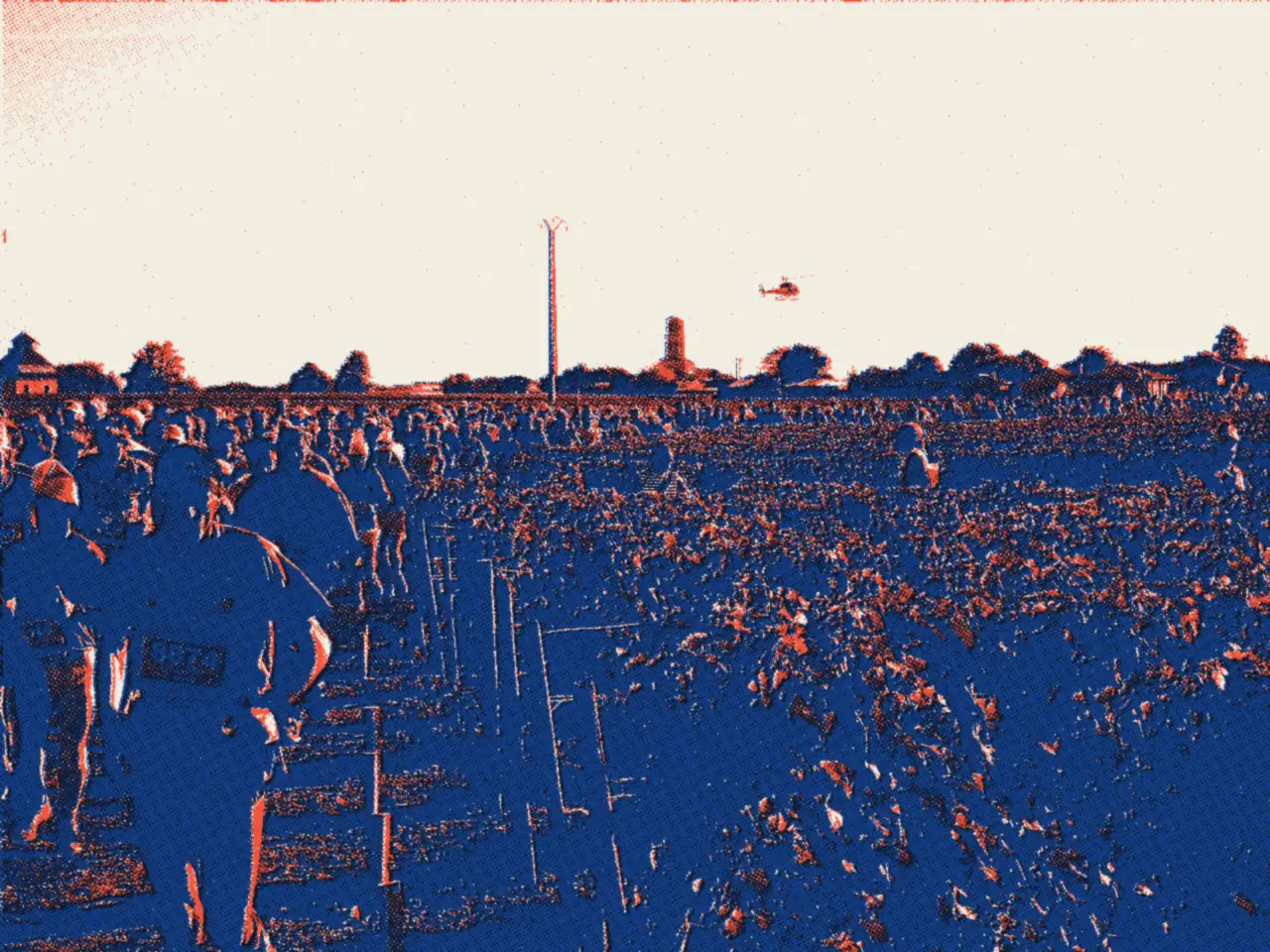
Around 20 grand cru tastings, oysters, a steak, and almost the whole field in costume. At the Médoc Marathon, the 42.195 km are real, but the finish time comes second to everything else.