The 1904 Olympic Marathon: The Most Absurd Race in History
One runner covers part of the course by car, the winner runs on rat poison, and a Cuban mailman stops to eat apples. St. Louis, August 30, 1904: the 1904 Olympic marathon, where almost everything that could go wrong did.
By the PacePoster desk · · 3 min · 6 sources
01A 1904 Olympic marathon designed to hurt
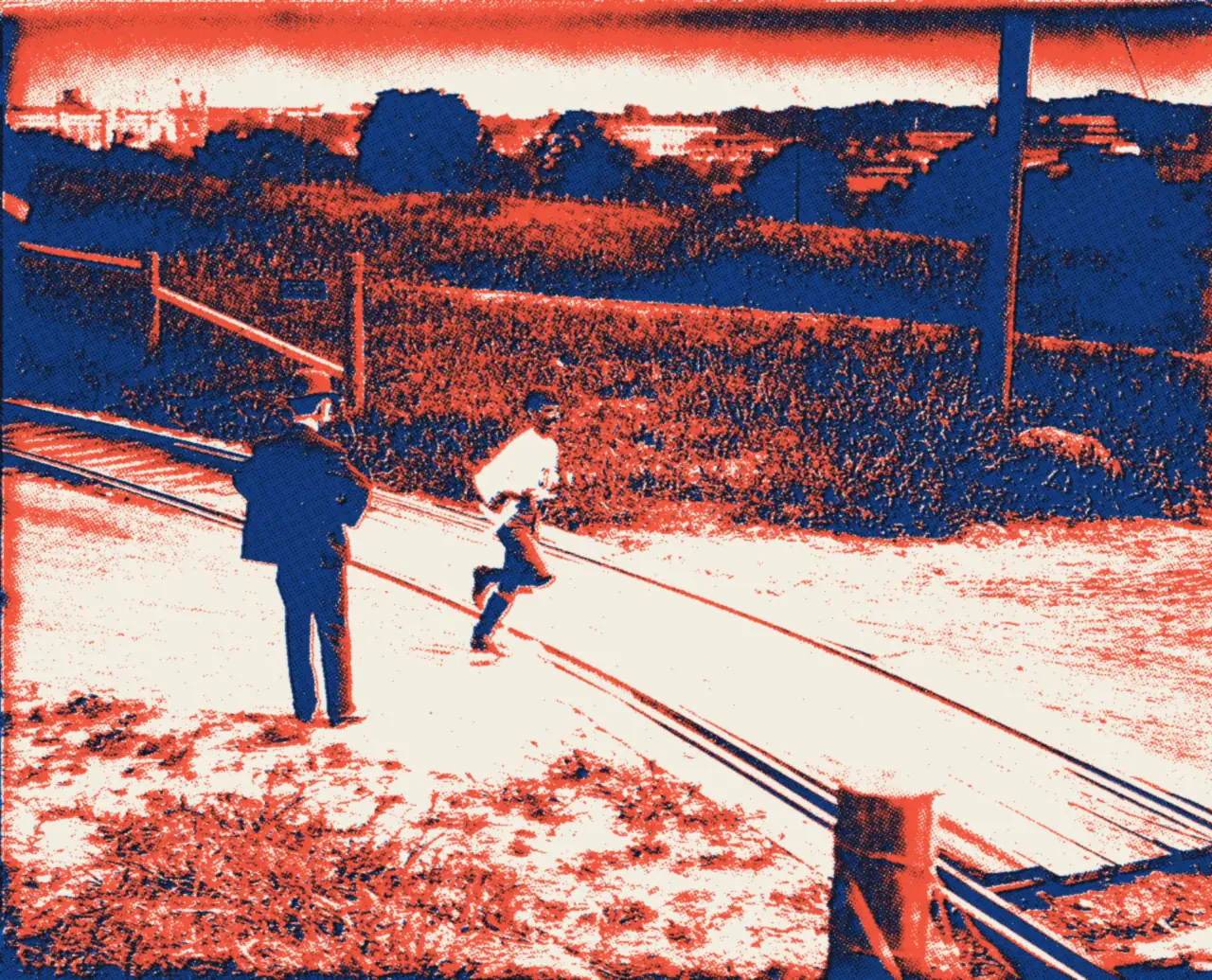
On August 30, 1904, 32 runners set off in St. Louis, Missouri, for 40 km. It is around 32 °C. The country roads are dirt, and the cars following the race kick up dust so thick that the runners sometimes vanish in it. For drinking: one official water stop, a well around the 12-mile mark. The organizer, James E. Sullivan, used the race to run his own experiment on dehydration, according to Popular Science. The result: 14 finishers out of 32. The rest? Dropouts, cramps, collapses.
02Fred Lorz, the four-wheeled shortcut
At mile 9, about 14 km in, Lorz cramps up. He climbs into a car. It eventually breaks down, so he starts running again less than 10 km from the finish, enters the stadium first and is cheered to the rafters. Alice Roosevelt, the president’s daughter, is even about to hand him the medal. The trick is soon uncovered, and Lorz calls it a joke. Disqualified, he is banned for life by the AAU, then the ban is lifted. In 1905, he wins the Boston Marathon. Maximum nerve.
Don’t do that to your next 10K.
03Thomas Hicks, champion on rat poison
The real winner is Thomas Hicks: 3:28:53. To keep him upright, his handlers feed him strychnine, the poison in rat killer, mixed with egg white. Around mile 20, another dose, washed down with brandy this time. He finishes alternating between walking and jogging, and crosses the line held up by two men. American Heritage describes him in a state of deep stupor, about ten pounds lighter after a little over three hours. Doping is not yet banned at the Games, so his win stays in the record books. Don’t do that to your next 10K.
04Félix Carvajal, in street clothes and green apples
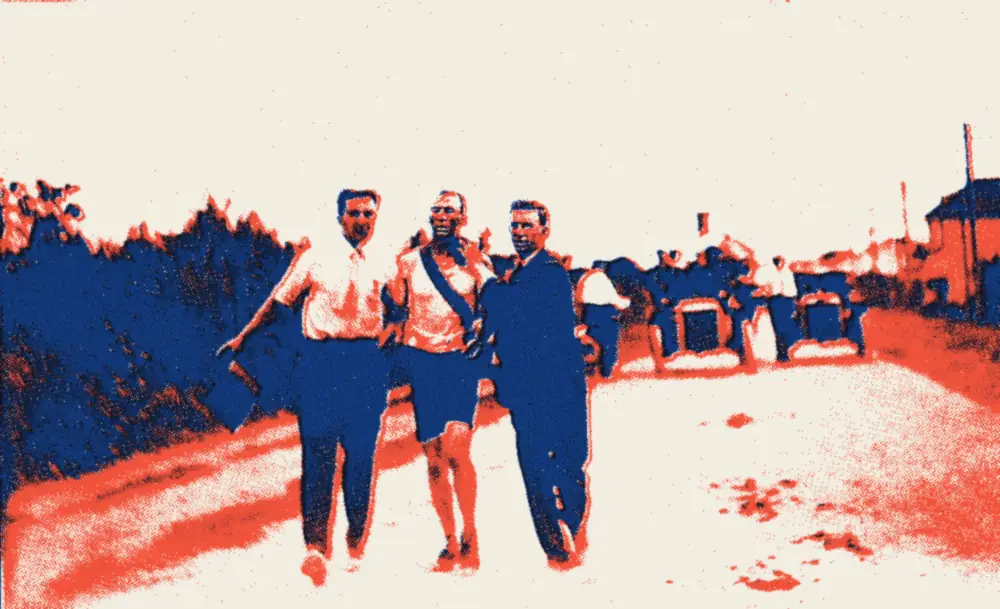
The most endearing of the bunch is a Cuban mailman, Félix Carvajal. He pays for his trip by running in front of crowds in Cuba, loses his money in New Orleans (at dice, according to American Heritage) and hitchhikes the rest of the way. He turns up at the start in street clothes: American athlete Martin Sheridan cuts his trousers off at the knee. On the course, he stops in an orchard to munch on unripe apples. Stomach cramps guaranteed, and Popular Science even gives him a nap. He still finishes 4th. In cut-off trousers.
05Len Taunyane, chased by dogs
Len Taunyane (also known as Len Tau) and Jan Mashiani, two Tswana men from South Africa, are in St. Louis for the World’s Fair show about the Boer War, in which they had served as messengers. They are presented as the first Black Africans in Olympic history (a white South African, Bertie Harris, also runs this marathon but does not finish). Taunyane finishes 9th, Mashiani 12th. And Taunyane could have done better: dogs chased him off the course, through a cornfield according to American Heritage, for nearly a mile according to Popular Science.
Sources for this story (6)
Every fact was cross-checked in at least two independent sources. Where they disagree, the story says so.
- 1904 Olympic Marathon, résultats et récit — Olympedia
- The First American Olympics — American Heritage (Peter Andrews, 1988)
- At the 1904 Olympics, a marathoner took rat poison to win gold — Popular Science (Shoshi Parks, 2026)
- Who were the first Africans at the Olympics? — Mail & Guardian / The Conversation (Francois Cleophas, 2024)
- Frederick Lorz — Musée olympique (Google Arts & Culture)
- What happened at the 1904 Olympic marathon? — St. Louis Magazine
Read next
The whole journal → No. 02
54 Years, 8 Months and 6 Days: Shizo Kanakuri and the Slowest Marathon Ever
The slowest marathon time ever belongs to Shizo Kanakuri. In 1912 he vanished mid-race at the Stockholm Olympics. In 1967 he finally crossed the finish line. In between: 54 years, 8 months and 6 days, a Guinness record and six children.
 No. 03
New York 1970: 127 Runners, $1 and Laps of Central Park
The first New York Marathon was run on September 13, 1970: 127 people paid $1 to circle Central Park for 26.2 miles (42.195 km). Fifty-five made it to the finish. In 2025 the same race counted 59,226 finishers, a world record.