Abebe Bikila, Rome 1960: The Barefoot Marathon by Torchlight
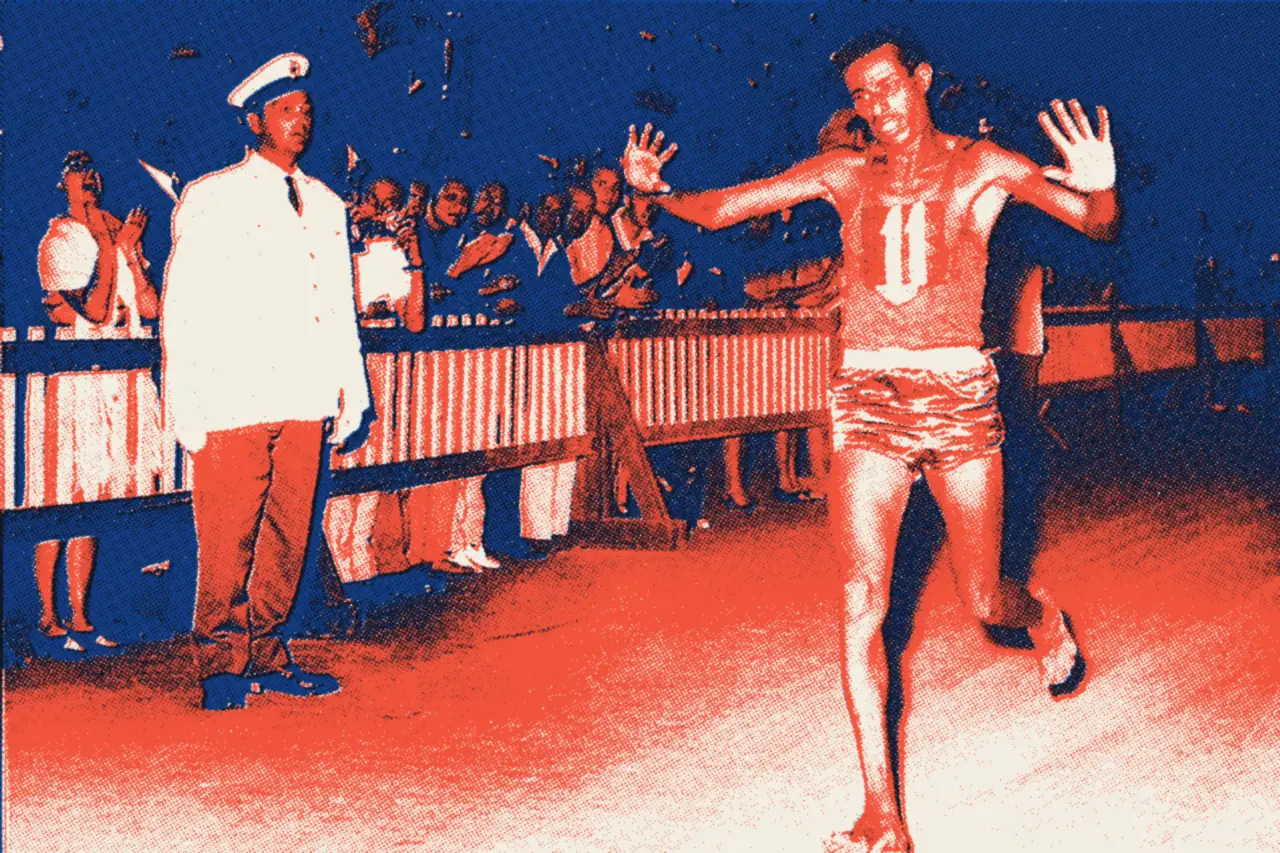
Why did Abebe Bikila run barefoot? On September 10, 1960, a near-unknown Ethiopian sets off from Rome’s Capitoline Hill without shoes, and sources disagree on exactly why. Two hours later, Italian soldiers light with torches the road he is climbing back up in the lead, toward the Arch of Constantine. He has just broken the world record.
By the PacePoster desk · · 3 min · 15 sources
01An unknown arrives in Rome
Abebe Bikila is no star when he lands in Rome. A soldier in the Ethiopian Imperial Guard, he has only recently started running marathons. In the athletics world, almost nobody has heard of him.
02Why did Abebe Bikila run barefoot?
This is where the accounts diverge. According to World Athletics, his shoes fall apart in the last days before the Games, and the pair bought to replace them gives him blisters. According to AIMS, the shoes bought in Rome are simply uncomfortable; according to the Olympic Museum, he cannot find any in his size. Every version leads to the same result: he runs barefoot, as he often does in training, the Olympic Museum notes. None describes a gesture of defiance: it is a story about shoes, not a manifesto.
He has just broken the world record.
03A race run by torchlight
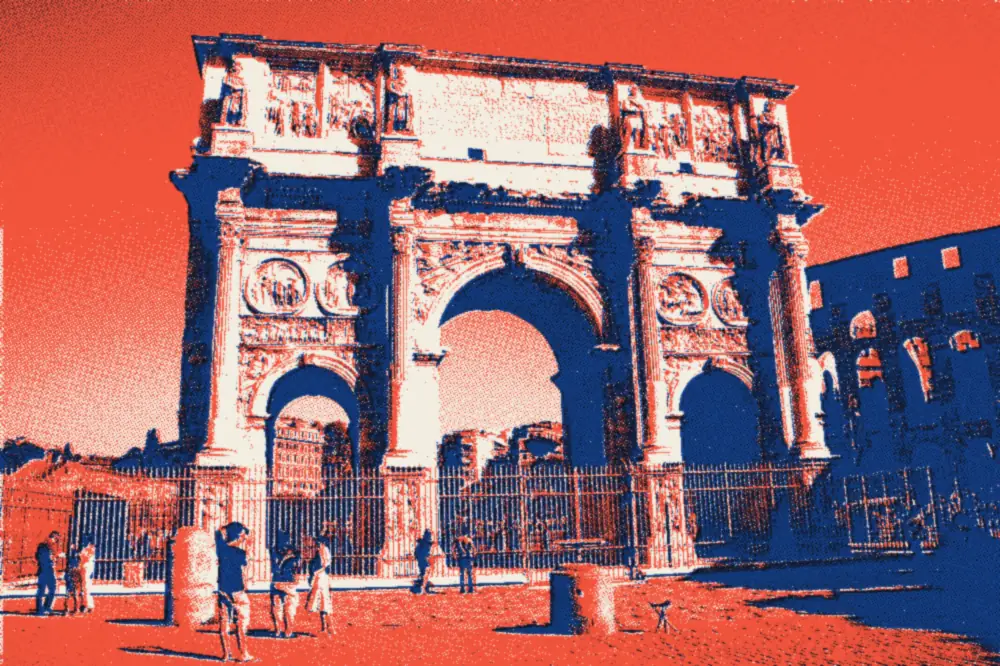
The start is at 5:30 p.m. on the Campidoglio square, to avoid the heat. The finish is judged under the Arch of Constantine, a stone’s throw from the Colosseum. In between, night falls: Italian soldiers light the road with torches, all the way along the Appian Way. Hundreds of them, according to World Athletics. From the 20th kilometer on, Bikila and Morocco’s Rhadi Ben Abdesselam lead the race side by side.
04The Axum obelisk
In the finale, the race passes the Axum obelisk, an Ethiopian stele carried off to Rome by Mussolini’s troops in 1937, which would not go back to Axum until 2005. It is there, about 500 meters from the finish, that Bikila drops Rhadi. The sources describe the place, not an intention: the coincidence is too good to ignore, too fragile to tell as a plan.
052:15:16
He crosses the line in 2:15:16.2, a world record and Olympic record, with a margin of 25 sec over Rhadi. The bronze medal goes to New Zealand’s Barry Magee. It is the first time a Black African wins the Olympic marathon.
06Tokyo, then the road
Four years later, in Tokyo, he wins again, wearing shoes this time, a little over a month after an appendicitis operation: 2:12:11.2, a new world record, with a lead of more than four minutes. Nobody had yet won two Olympic marathons. In 1969, a car accident leaves him paralyzed. He dies on October 25, 1973, aged 41, of a cerebral hemorrhage linked to that accident. The Olympic Museum salutes him as a pioneer who opened the way for African distance runners.
Sources for this story (15)
Every fact was cross-checked in at least two independent sources. Where they disagree, the story says so.
- Marathon, Men, 1960 Rome Olympics — Olympedia
- Abebe Bikila — Olympedia
- Marathon, Men, 1964 Tokyo Olympics — Olympedia
- Abebe Bikila wins the marathon at the 1960 Olympic Games in Rome — World Athletics (Steve Landells, 2020)
- Abebe Bikila — Heritage Plaque — World Athletics
- Abebe Bikila — Musée olympique / Google Arts & Culture
- Abebe Bikila — AIMS (2017)
- Abebe Bikila wins gold at Rome Olympic Games — South African History Online
- UNESCO kicks off project for Italy's return of Ethiopian artefact — ONU Info (2007)
- Aksum obelisk — Archaeology Magazine (2009)
- All set for Axum obelisk's return — Al Jazeera (2005)
- Acea Run Rome The Marathon 2026 — Turismo Roma
- Maratona di Roma 2026 : percorso, orari — Mentelocale
- API Wikimedia Commons — licence de la photo de 1960
- API Wikimedia Commons — licence de la photo de l'Arc de Constantin
Read next
The whole journal → No. 20
Rosie Ruiz, Boston 1980: The Winner Who Only Ran the Last Mile
On April 21, 1980, an unknown 26-year-old crosses the finish line of the Boston Marathon first among the women, in 2:31:56. A laurel wreath is placed on her head. There is just one catch: nobody saw her run.
 No. 25
Grete Waitz, the Rabbit Who Won New York: World Record, Then “Never Again”
Grete Waitz won the New York City Marathon nine times, but the first one was an accident. In October 1978, New York invites a Norwegian track runner to set the pace for the favorites. She has never run more than 12 miles. She wins in a world record, swears it was the last time, and goes on to win eight more.