Birkebeinerrennet: A Backpack in Memory of a Baby King
Birkebeiner history starts in the winter of 1206, in Norway: two skiers cross the mountains carrying a child who will become king. Since 1932, thousands of skiers have retraced the crossing with a pack on their back, in memory of that child. It weighed 5.5 kg, then 3.5 kg. For 2027, it will be 2 kg.
By the PacePoster desk · · 4 min · 14 sources
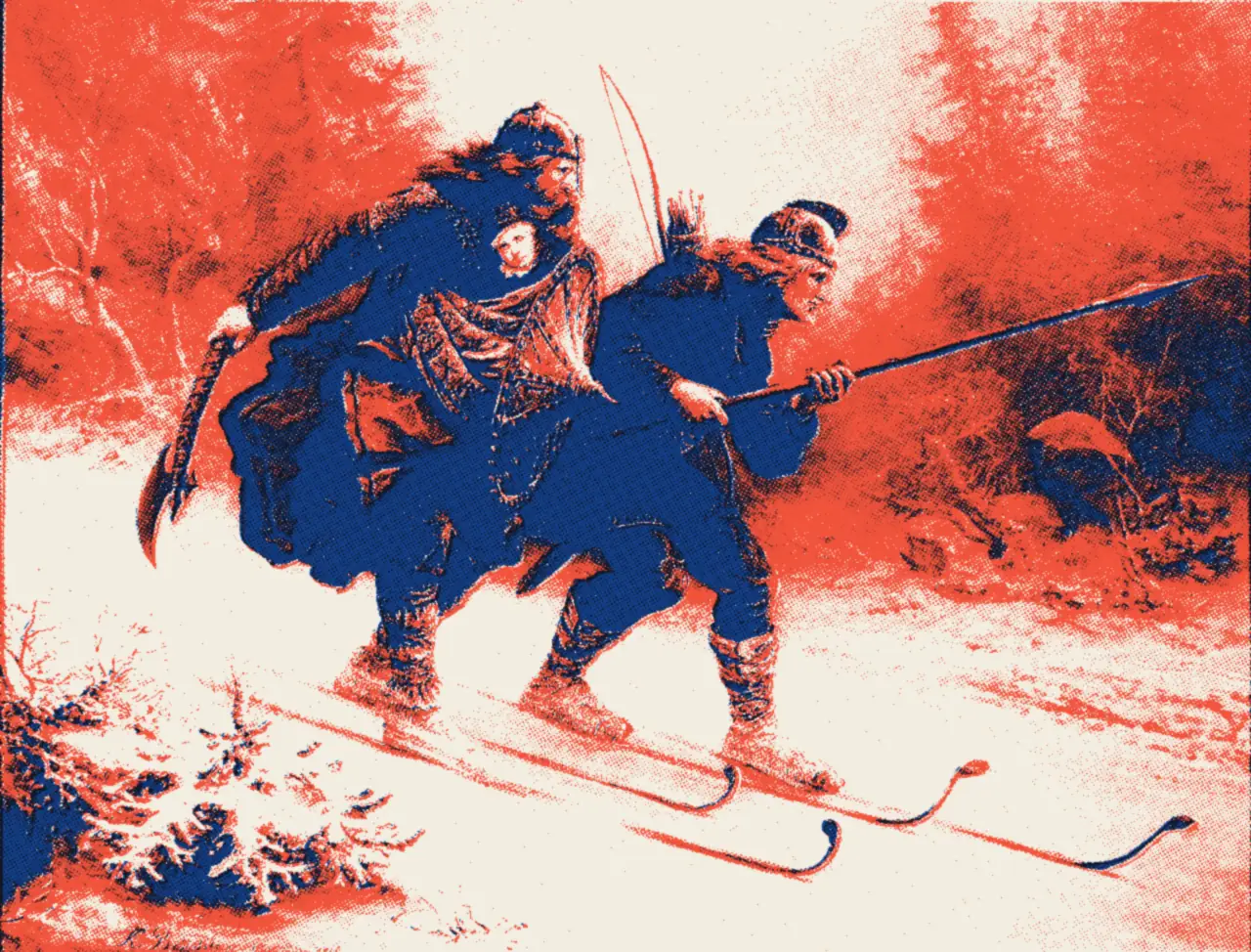
01A child everyone wants
Norway, early 13th century: civil war pits the “birkebeiner” against the “bagler.” The name of the former, “birch legs,” starts out as a contemptuous nickname: they recruited among people so poor that they wrapped their feet in birch bark for lack of shoes, explains Store norske leksikon (other sources speak of leggings). The birkebeiner are guarding a treasure: Håkon Håkonsson, born in 1204 at Folkenborg, in what is now Østfold, presumed son of the birkebeiner king Håkon Sverresson.
02The crossing
According to Håkon’s saga, the child must be taken north, to Trondheim, in the depths of the winter of 1205-1206. The group first stops at a farm north of Lillehammer. To avoid the Gudbrandsdal valley, the birkebeiner choose the mountain. Tradition has it that their two best skiers, Torstein Skevla and Skjervald Skrukka, go ahead with the little one, as far as the Østerdal valley.
It symbolizes the child carried across the mountain.
03The saga, not a police report
A word of caution: the main source is Håkon’s saga, written by the Icelander Sturla Þórðarson in the years after the king’s death in 1263. That is about sixty years after the events. The site Norgeshistorie notes “miraculous” passages in it and advises taking it with a grain of salt. The child’s age varies by source: 18 months for Worldloppet and the race organizer, one year for NRK, two years for Store norske leksikon.
What is certain: the child arrives alive. He becomes king in 1217, reigns for more than forty years, and the civil war ends under his reign.
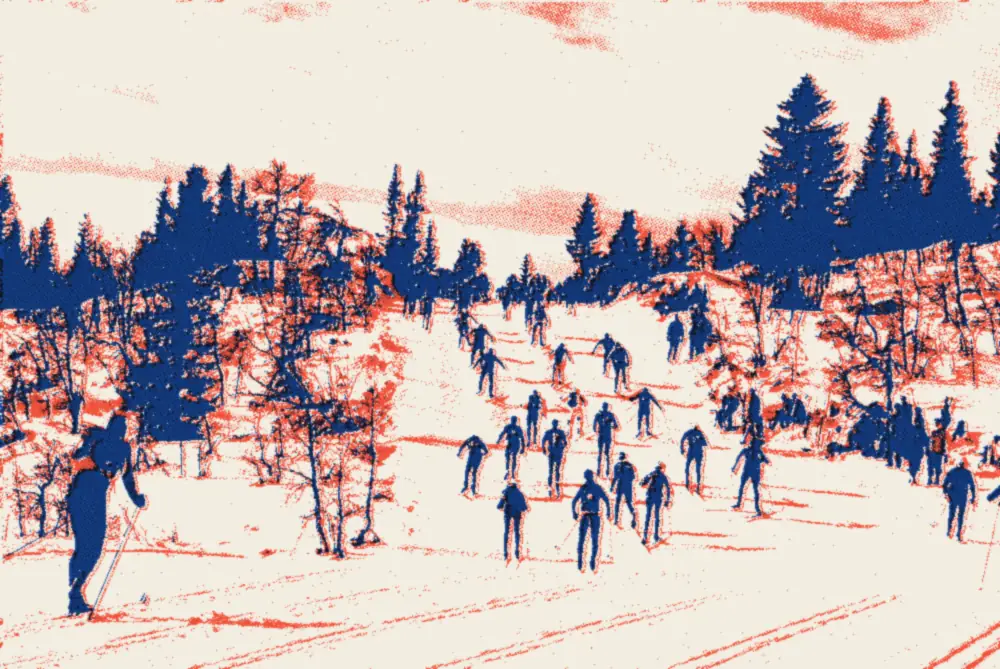
041932: a writer and six men
The race is born from an article. In the fall of 1930, writer and forester Haakon Lie floats the idea of a ski race in memory of the crossing, the organization says. On January 10, 1932, six men meet on the Raufjellet and decide to organize it. According to the organizer, 147 men finish the first edition, 59 km long, and Trygve Beisvåg wins it in 4:51:40. Worldloppet gives 60 km and 155 participants instead.
One detail changes everything: the race runs from Rena to Lillehammer, the opposite direction of the 1206 crossing.
05Birkebeiner history in grams: from 5.5 kg to 2 kg
The pack is mandatory. It symbolizes the child carried across the mountain. In 1932, it has to weigh at least 5.5 kg. In 1993, the minimum drops to 3.5 kg, because gear has gotten lighter. On May 29, 2026, the organizer announces a new threshold: 2 kg for upcoming editions, as clothing, packs and safety equipment weigh far less than before. Because the pack is not just a symbol: it has to hold what you need to face the mountain, windbreaker, spare gloves, food, drink, wax, Worldloppet spells out.
The course measures 54 km according to Store norske leksikon; the organizer lists it at 53 km for 2027. The records date from 2015: 2:19:28 for Petter Eliassen, 2:41:46 for Therese Johaug.
06A crowd, and the wind
In 2014, more than 17,000 skiers are registered. On the morning of the race, March 15, the organization cancels everything: too much wind on the mountain, with gusts up to 25 m/s, NRK reports. It had already happened once, in 2007, for the same reason. The record for starters dates from 2013: more than 16,000, according to Store norske leksikon.
Sources for this story (14)
Every fact was cross-checked in at least two independent sources. Where they disagree, the story says so.
- Birkebeinerrennet — Store norske leksikon (Rolf Bryhn et Jørn Sundby, mis à jour le 2 mars 2026)
- Håkon 4. Håkonsson — Store norske leksikon (Knut Helle et Per G. Norseng)
- Birkebeiner — Store norske leksikon
- Birkebeinerne — Norgeshistorie (Per G. Norseng)
- The Birkebeiner history — Birken (organisateur)
- Justert vektkrav på Birken-sekken — Birken (organisateur), 29 mai 2026
- Birkebeinerrennet 2027 — Birken (organisateur)
- Birkebeinerrennet — Worldloppet
- The saga of Birkebeinerrennet — Ski Classics (Teemu Virtanen et l'organisation Birken, 13 mars 2019)
- Med en liten prins over fjellet — NRK Innlandet (Linda Nordlie, 9 mars 2004)
- Birken er avlyst — NRK Innlandet (15 mars 2014)
- About Birken — Birken (organisateur)
- Catégorie Commons du tableau de Bergslien
- API Commons — Birkebeinerne_ski01.jpg et Birken02.jpg
Read next
The whole journal → No. 11
Médoc Marathon: The World's Longest Marathon, Where the Aid Station Serves Wine
Around 20 grand cru tastings, oysters, a steak, and almost the whole field in costume. At the Médoc Marathon, the 42.195 km are real, but the finish time comes second to everything else.
 No. 12
Man vs Horse: The Welsh Race Where a Human Has Actually Won
The Man vs Horse Marathon in Wales has pitted runners against horses since 1980. For 24 editions, the horses won. Then a guy in shorts won.