Tour de France 1913: Eugène Christophe's Broken Fork, Mended in a Forge
July 9, 1913, in the Pyrenees. Eugène Christophe is the virtual leader of the Tour when his fork snaps on the descent of the Tourmalet. The rules forbid any help: he will have to walk, forge, and pay in minutes for a kid's helping hand.
By the PacePoster desk · · 3 min · 23 sources
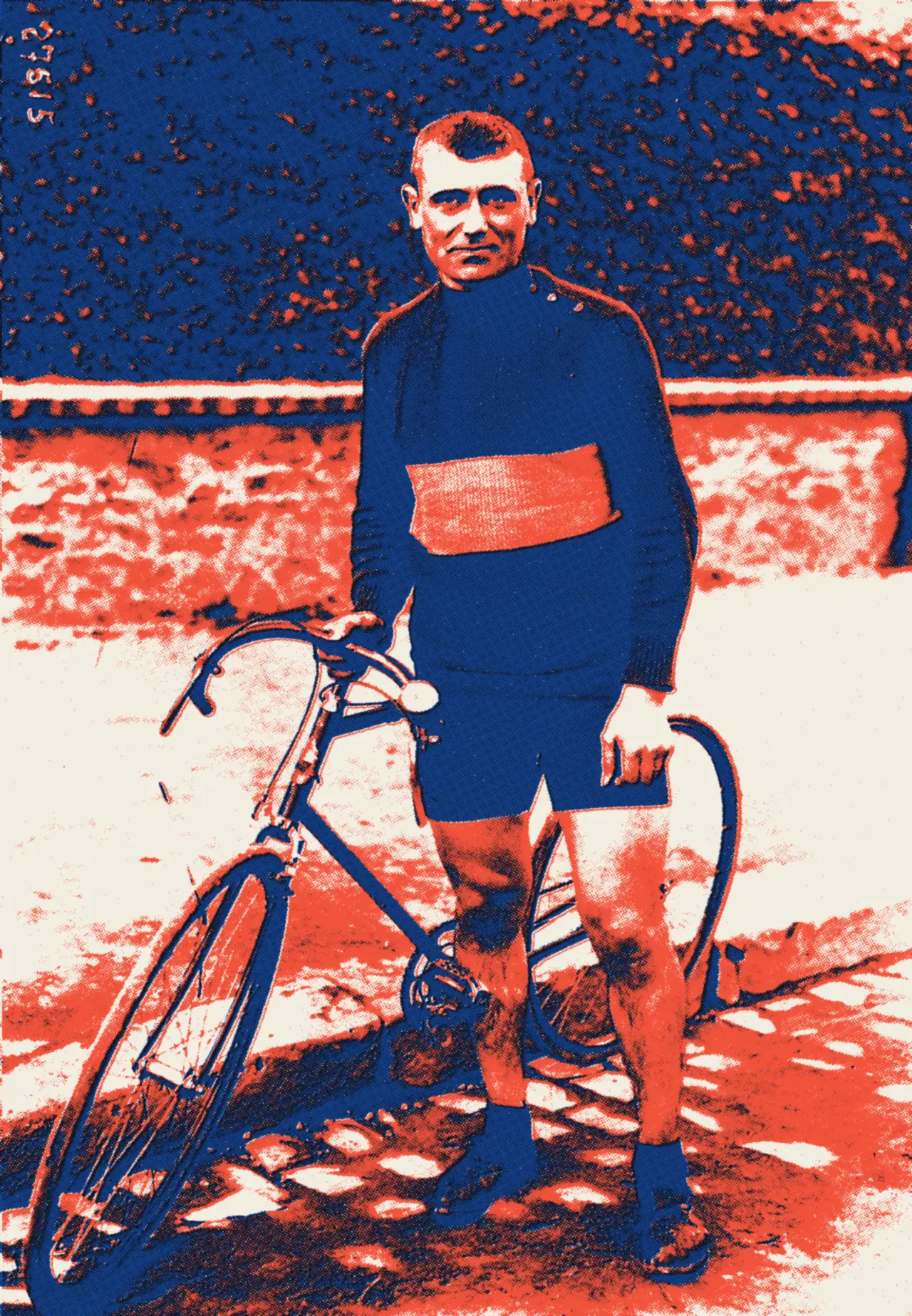
01Eugène Christophe on the Tourmalet: the Tour hangs on a fork
Stage 6, Bayonne to Luchon, 326 kilometers. At the summit of the Tourmalet, Christophe does the math. “I was 18 minutes ahead at the top of the Tourmalet,” he would later recall. Then, on the descent, the fork of his bike breaks.
Why? The accounts disagree. A stone, say some. A race car, say others. In his memoirs, Christophe simply blames the road, which was wrecked, according to the physician and historian Jean-Pierre de Mondenard. What nobody disputes: the bike is unusable, and Christophe is alone.
02Ten kilometers, or fourteen
The rule is clear: you repair it yourself, without any help. So Christophe shoulders the machine and walks down to Sainte-Marie-de-Campan. How far? Ten kilometers, says the sign planted where it broke, and so does the village monument. Fourteen, say the Larousse encyclopedia and franceinfo.
Meanwhile, the race rolls on. “What torment, watching all my comrades go by at 50 km/h while I wondered where I would find a forge,” he says.
And I set off again, 4 hours behind!
03The forge
In the village, he finds the forge of Joseph Bayle, according to the monument (other accounts name the blacksmith Lecomte). The blacksmith is not allowed to touch the fork. Just as well: Christophe trained as a locksmith. He forges a piece of scrap iron, files it, drills the broken tube and pins the whole thing together, he would later say.
Alone, though, he can't do it all. A village kid lends a hand: on the bellows, according to most accounts. Three race officials watch the scene. They take notes.
04Three minutes, or ten
Verdict: outside assistance. The final penalty is three minutes, according to franceinfo and ICI. Several accounts mention ten minutes, later reduced to three. Either way, it is a footnote next to the real gap. “And I set off again, 4 hours behind!” he sums up.
At Luchon, he crosses the line 3 hr 50 behind the stage winner, Philippe Thys. He is 29th on the day.
05Seventh, forever
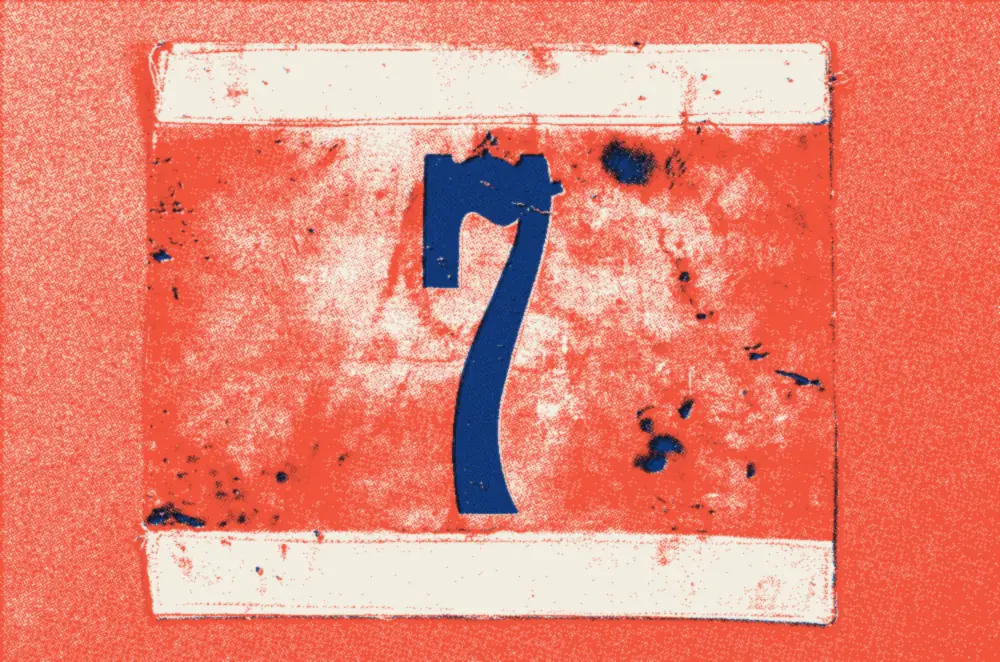
Christophe finishes this 1913 Tour in seventh place, 14 hr 06 min 35 s behind Thys, who wins the first of his three Tours. Would he have won without the fork? Nobody will ever know. Many accounts speak of a Tour lost that day. His 1913 bib, number 7, is now kept at the Musée national du sport.
In Sainte-Marie-de-Campan, a plaque recalls the episode at the forge, and a statue shows Christophe holding up his fork. The place where a rider was punished for getting a helping hand.
Sources for this story (23)
Every fact was cross-checked in at least two independent sources. Where they disagree, the story says so.
- Tour de France : c'est arrivé un 9 juillet… Eugène Christophe casse sa fourche et la répare lui-même — franceinfo (Louis Delvinquière, 2022)
- Le jour où Eugène Christophe a cassé sa fourche — franceinfo (Baptiste Schweitzer, 2013)
- Tour de France — Encyclopédie Larousse
- Tour de France : le premier maillot jaune était un serrurier malchanceux — ICI (Benjamin Vernet, 2019)
- La première légende du Tour dans les Pyrénées — ICI Béarn Bigorre (Eric Bentahar, 2026)
- Eugène Christophe, premier maillot jaune de l'histoire — ICI, « Sacré Tour de France ! » (Lorànt Deutsch, 2013, rediff. 2025)
- La fourche d'Eugène — INA, « Histoires des bords de route » (France Télévisions/INA, 2013)
- Récit de sa mésaventure pendant le Tour de France 1913 par Eugène Christophe — INA Mediaclip (1970)
- Eugène Christophe reads the commemorative plaque of his feat — INA Mediaclip (1968)
- Eugène Christophe and the makeshift repair of his bike in 1913 — INA Mediaclip (1968)
- L'Année à bloc : 13 erreurs — Dr Jean-Pierre de Mondenard (2025)
- Tour de France 1913 — BikeRaceInfo (Bill McGann)
- Eugène Christophe — BikeRaceInfo, galerie coureurs
- Philippe Thys — BikeRaceInfo, galerie coureurs
- Tour de France 1913, Race Snippets — Cycling Revealed (Barry Boyce)
- Philippe Thys — Cycling Revealed
- Tour de France 1913 : classement et résultats — sport-histoire.fr
- Tour de France 1913 : le forgeron de Sainte-Marie-de-Campan — Pyrénées Passion
- Eugene Christophe's fork disasters — Cycling Legends
- Panneau « Eugène Christophe — C'est ici » sur le Tourmalet — photo Anthospace, Wikimedia Commons (2021)
- Campan — Hommage à Eugène Christophe — photo Renhour48, Wikimedia Commons (2025)
- Sainte-Marie-de-Campan, 8 octobre 2019 — photo Paul Hermans, Wikimedia Commons
- Dossard d'Eugène Christophe, Tour de France 1913 — Musée national du sport (MS 949), via Wikimedia Commons
Read next
The whole journal → No. 08
“You Are Murderers!”: The Day the Tour de France Discovered the Pyrenees
July 1910: the Tour de France takes on the Pyrenees for the first time, and the Tourmalet is the big one. Octave Lapize, at the end of his strength, throws a phrase at the organizers that history never forgot. Even if nobody agrees on the exact words.
 No. 22
Vätternrundan: 300 km Around a Swedish Lake, Starting at Night
On a Friday evening in June, thousands of cyclists set off in waves, one every 2 minutes, to ride around a Swedish lake. Behind the Vätternrundan, the world's largest recreational cycling event according to its organizers: a doctor, a bike shop owner and 22 hr 30 min in the saddle.