Stelvio 1953: Coppi Overturns Koblet and Wins His Giro
On June 1, 1953, the Giro climbs the Stelvio for the first time. Fausto Coppi is chasing Hugo Koblet's pink jersey. At the finish in Bormio, he is the one wearing it, after a day in which the promise attributed to him went up in smoke.
By the PacePoster desk · · 3 min · 16 sources
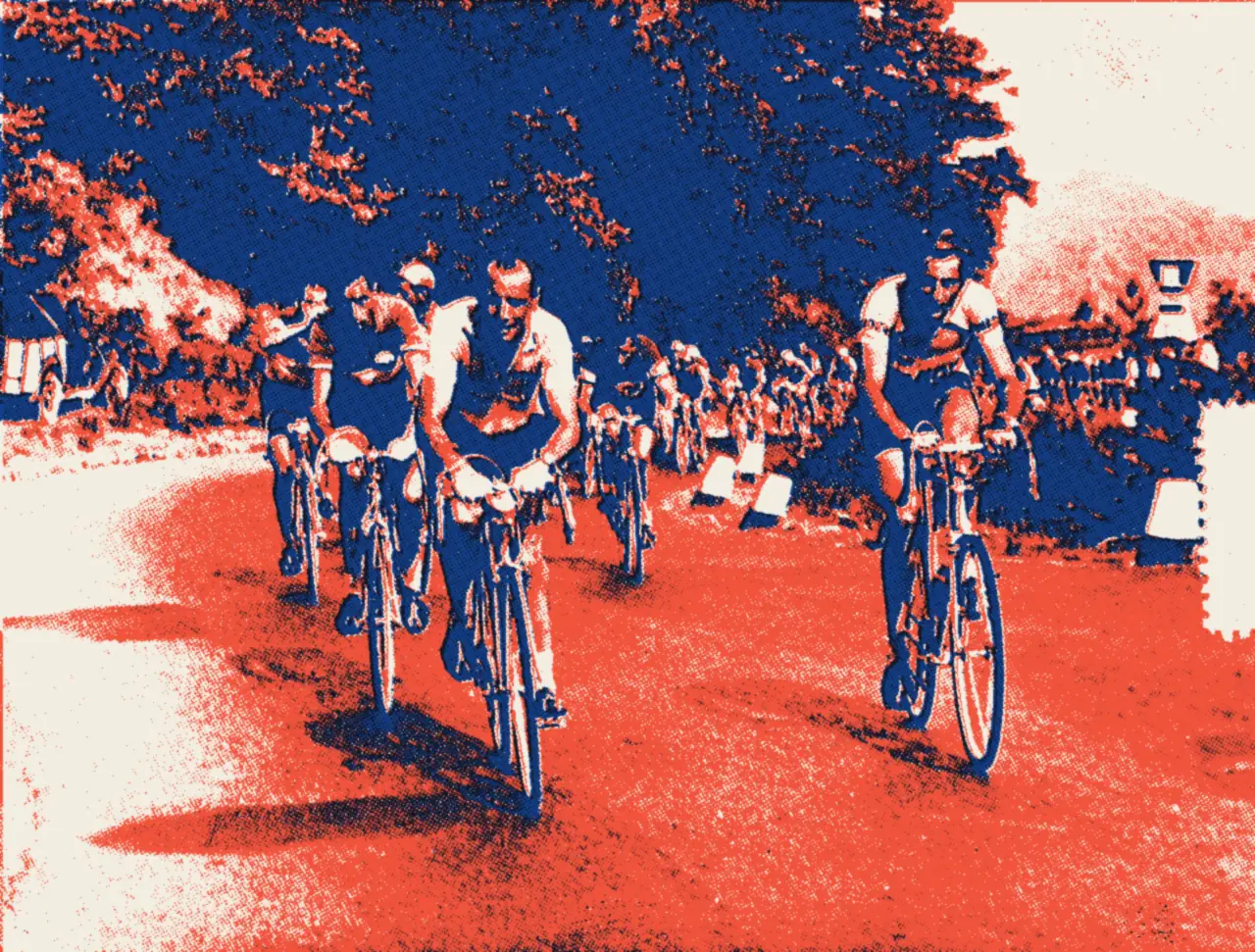
01A Giro he is in the middle of losing
Hugo Koblet, the 1950 winner, wears the pink jersey. On the evening of May 31, Coppi trails by 1 min 59 sec. That day, in Bolzano, he won the stage without taking back a single second from the Swiss: the two men crossed the line together. Some see an understanding between them, Il Post recalls.
Coppi himself seems resigned, with the Stelvio still to come. “Koblet won; I am happy to finish the race behind a champion, Koblet! Tomorrow there is still the Stelvio. But tomorrow is too late!” he is said to have told the press at the finish, according to l'Unità's special correspondent.
The Giro, which left Milan on May 12, is due to end there on June 2. Two stages remain, a Swiss in pink, and a mountain the race has never climbed before.
02A promise that doesn't hold
Legend has it that a deal was struck in Bolzano: the stage for Coppi, peace for Koblet the next day. The versions vary, Il Post points out, and nothing proves what the deal actually said. What we do know is what came next.
On the climb, above Trafoi, it is the young Nino Defilippis who attacks. According to one theory, Coppi asked him to do it to get around the deal. Koblet, supposedly staying calm, nevertheless jumps on his wheel. A mistake: by reacting, he exposes himself.
Tomorrow there is still the Stelvio. But tomorrow is too late!
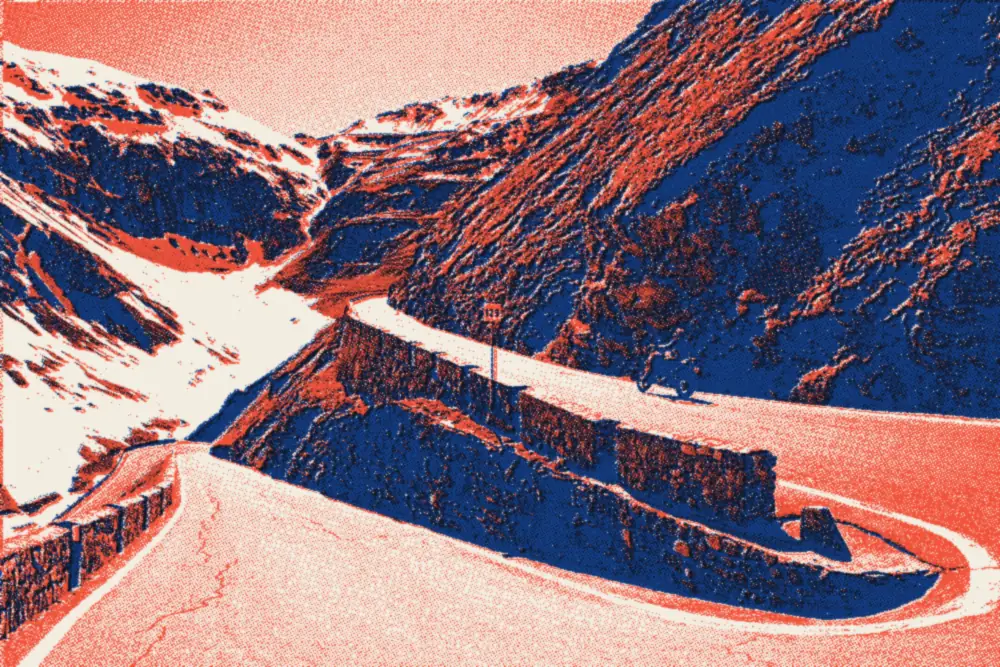
03The Stelvio Giro 1953 climb: 48 hairpins, 2,757 m
Via Prato and Trafoi, the side the race takes that day, the Stelvio strings together 48 hairpins up to 2,757 m (2,758 m according to other sources, including l'Unità in 1953). The road, built by the Austrians, was completed in 1825. In 1953, the Giro had never climbed it.
Coppi accelerates. Once, twice: the others drop one by one. On the third, Defilippis and Koblet crack in turn, l'Unità reports. At the summit, the pink jersey is more than four minutes back.
04Koblet falls twice
On the descent to Bormio, Koblet risks everything and claws back a little time. But he punctures, then crashes, twice. Coppi crosses the line 3 min 28 sec ahead of him (“three and a half minutes,” rounds Il Post). He takes the pink jersey.
What happened that night in Bolzano? A party that went on too long, a bad night, stimulants: the versions overlap, and nothing has been proven.
05A win by 1 min 29 sec
Final standings, in Milan the next day: Coppi, 118 hr 37 min 26 sec; Koblet at 1 min 29 sec; Pasquale Fornara third, at 6 min 55 sec. It is Coppi's fifth Giro.
06Why it's called the "Cima Coppi"
The name doesn't exist yet. It is born in 1965: since then, Il Post notes, the highest summit of each Giro is called the Cima Coppi. When the race goes over the Stelvio, that is it.
Sources for this story (16)
Every fact was cross-checked in at least two independent sources. Where they disagree, the story says so.
- Sui « tetto » del Giro trionfale cavalcata di Coppi… — l'Unità, page 5 (Attilio Camoriano, 2 juin 1953)
- Fausto Coppi, il Giro e lo Stelvio del 1953 — Il Post (2 juin 2023)
- Giro d'Italia 1953 — BikeRaceInfo (Bill McGann)
- Giro d'Italia 1950 — BikeRaceInfo
- GdI 1953, Race Snippets — Cycling Revealed
- Koblet v Coppi, Giro d'Italia 1953 — Cycling Passion
- Coppi's 1953 Giro d'Italia win — Cycling Legends
- Passo dello Stelvio — Südtirol.info (office du tourisme du Haut-Adige)
- Stèlvio, passo dello — Sapere.it (Enciclopedia De Agostini)
- Stelvio — Dictionnaire historique de la Suisse (HLS-DHS-DSS)
- Giro d'Italia 2013, tappa — Il Sole 24 Ore (23 mai 2013)
- Giro d'Italia 1953 — Wikipédia en italien
- 1953 Giro d'Italia — Wikipédia en anglais
- Cima Coppi — Wikipédia en anglais
- Passo dello Stelvio — Wikipédia en italien
- Stelvio Pass — Wikipédia en anglais
Read next
The whole journal → No. 37
Froome Running Up Mont Ventoux: A Yellow Jersey With No Bike
On July 14, 2016, the yellow jersey of the Tour de France is running up Mont Ventoux on foot, his bike wrecked after a crash caused by a motorbike. Froome running on Mont Ventoux then forces the jury to decide whether a rider can lose a Tour because of a motorbike stopped in the wrong place.
 No. 38
The Coppi and Bartali Bottle: Who Hands What to Whom?
Who handed the bottle to whom in the famous Coppi Bartali bottle photo? Two rivals, an Alpine climb, a bottle changing hands. More than seventy years later, nobody has established who gives, who receives, or even whether the scene was spontaneous.