Western States 100: The Race Born Because a Horse Went Lame
The Western States 100 history starts with a limp. In 1973 a horse goes lame and its rider does not finish the race. The next year, that rider finishes it on foot, and unknowingly lays the first stone of modern ultrarunning.
By the PacePoster desk · · 3 min · 6 sources
01Western States 100 history: a rider with no horse
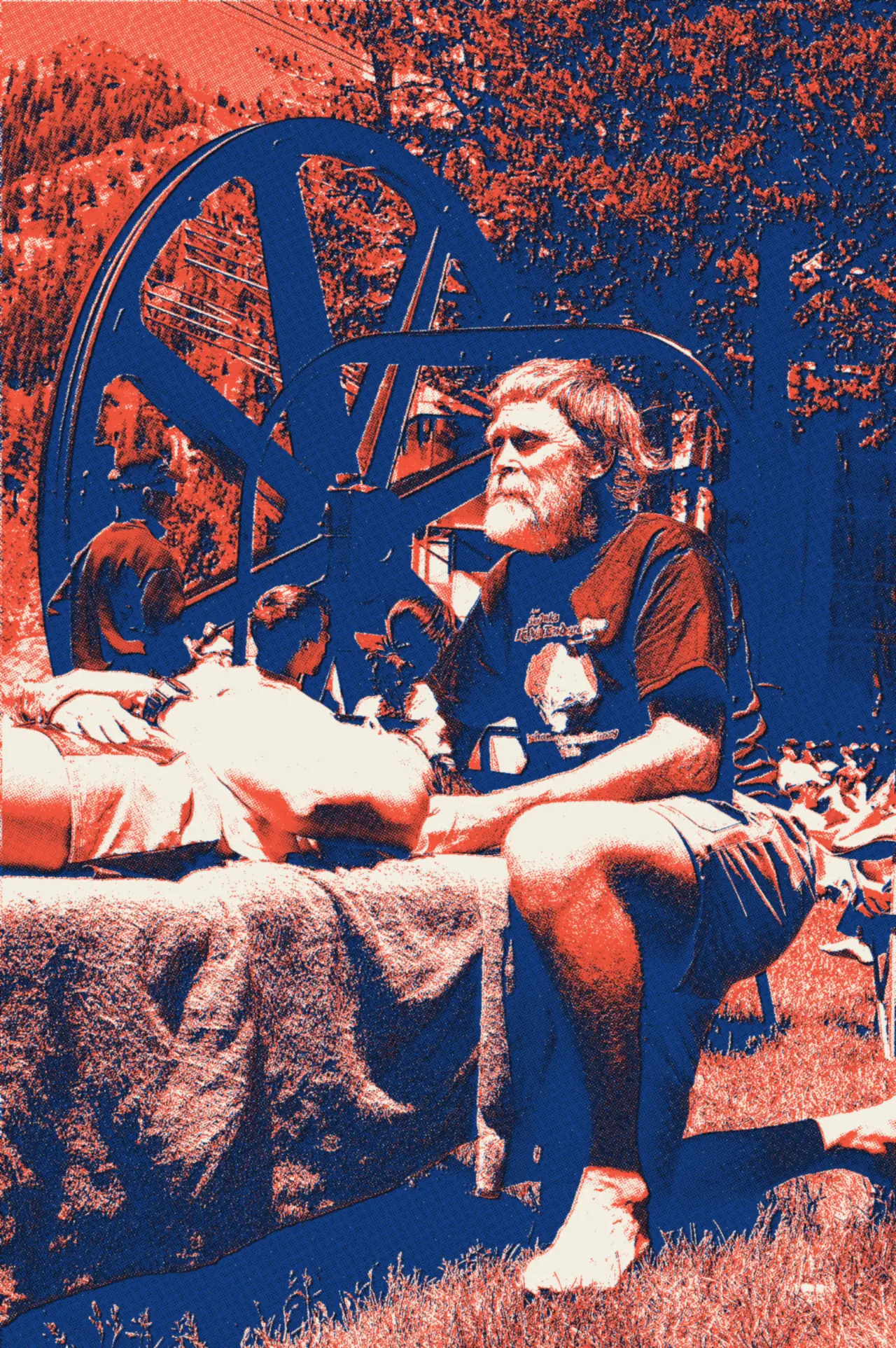
The Tevis Cup is a horse race launched in 1955 by Wendell Robie: 100 miles in a single day on the trails of the Sierra Nevada, from Squaw Valley to Auburn, California. Gordy Ainsleigh knows it well: he has already finished it twice on horseback.
In 1973 he goes for a third finish. No luck: his horse goes lame and is pulled at the mile 29 check. The next year, Gordy still has no mount.
02The dumb (and brilliant) plan
Another rider would have waited to find a horse. Gordy turns the question around: what if he did the running himself? His friends finish the job of convincing him.
So in August 1974 he shows up on foot among the horses of the Tevis. He runs the 100 miles of trail and reaches Auburn in 23:42, under the 24-hour mark of the horse race. He would later say he suffered through 107 °F heat. Legend calls him “the first man to run the course”; the organization's record is that he completed it on foot in under 24 hours, alongside the horses. That is already huge.
The ultra has its Grail, and it is worn on the belt.
031977: the Western States 100 becomes official
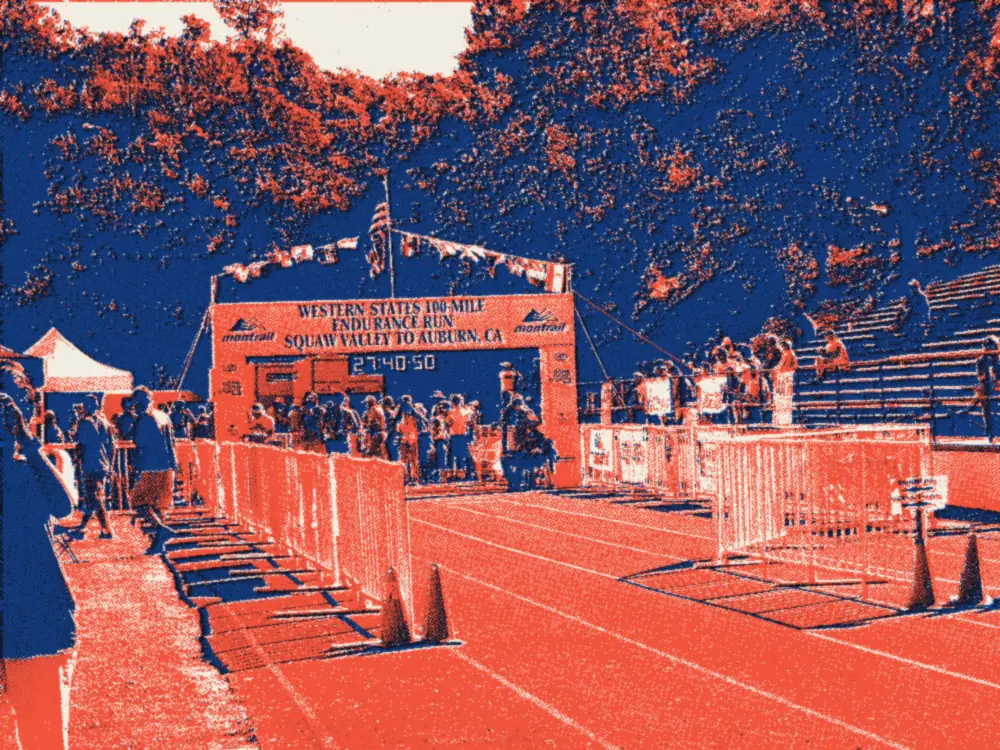
Gordy opened the door, and others walk through. The first official Western States Endurance Run takes place in 1977 (on July 30, according to the ARRS statisticians), at the same time as the Tevis. It starts at Squaw Valley, now Olympic Valley, and finishes in Auburn, with names runners know by heart that are still on the course: Robinson Flat, Devil's Thumb, Michigan Bluff.
There are 14 starters according to Outside and Trail Runner (other accounts say 16 entrants). Only three see Auburn. Just one breaks 24 hours: Andy Gonzales, 22 years old, in 22:57. Peter Mattei and Ralph Paffenbarger, 53 and 54, come in together in 28:36. According to Trail Runner, their time is what set the 30-hour cutoff.
04The belt buckle
Since then there have been two awards: a silver belt buckle for those under 24 hours, a bronze buckle for the other finishers, under the 30-hour cutoff. The ultra has its Grail, and it is worn on the belt.
One more detail: the 1977 course was not quite 100 miles. According to the ARRS, it was probably 88.5 miles at most. It was lengthened by 5 miles in 1980, then by 6.5 miles in 1985. Today the organization lists 100.2 miles.
Sources for this story (6)
Every fact was cross-checked in at least two independent sources. Where they disagree, the story says so.
- wser.org (organisateur) : [résultats 1974](https://www.wser.org/results/1974-results/), [résultats 1977](https://www.wser.org/results/1977-results/), [communiqué 2023](https://www.wser.org/2023/06/21/2023-ws-100-media-release/), [bilan 2026](https://www.wser.org/2026/06/29/2026-race-recap/), [History](https://www.wser.org/history/), [ravitaillements](https://www.wser.org/aid-stations/) : 23:42 en août 1974, Gonzales 22:57, Mattei / Paffenbarger 28:36, boucles argent / bronze, 100,2 miles.
- Trail Runner Magazine : [How Western States Became a Race](https://www.trailrunnermag.com/races/trail-race-news/how-western-states-became-a-race) et [Of Angels and Winged Gods](https://www.trailrunnermag.com/people/news/of-angels-and-winged-gods/) : Tevis 1955, cheval boiteux en 1973, 1974 sans cheval, 14 partants, barrière des 30 h, 107 °F.
- The Toughest Footrace in the World — Outside
- The Western States 100, by the Numbers — iRunFar
- Tevis Cup — Horse Illustrated
- Western States 100 mile — ARRS
Read next
The whole journal → No. 06
Barkley Marathons: $1.60, a License Plate and a Cigarette
To enter the Barkley Marathons, you need an essay, $1.60 and, the first time, a license plate. To start, you wait for a man to light a cigarette. Welcome to the Barkley.
 No. 07
Mauro Prosperi: Lost in the Sahara in the Middle of the Marathon des Sables
The Mauro Prosperi survival story starts in 1994. An Italian athlete lines up for the Marathon des Sables and vanishes in a sandstorm. About ten days later he is found alive in Algeria, 291 km from the course.