El Ouafi: The Renault Factory Hand Who Became Olympic Champion in Amsterdam
August 5, 1928, Amsterdam. A laborer from the Renault factories wins the Olympic marathon in a France jersey, by 26 seconds. Then his name falls into oblivion. This is the story of Boughera El Ouafi.
By the PacePoster desk · · 3 min · 11 sources
01A laborer at Billancourt
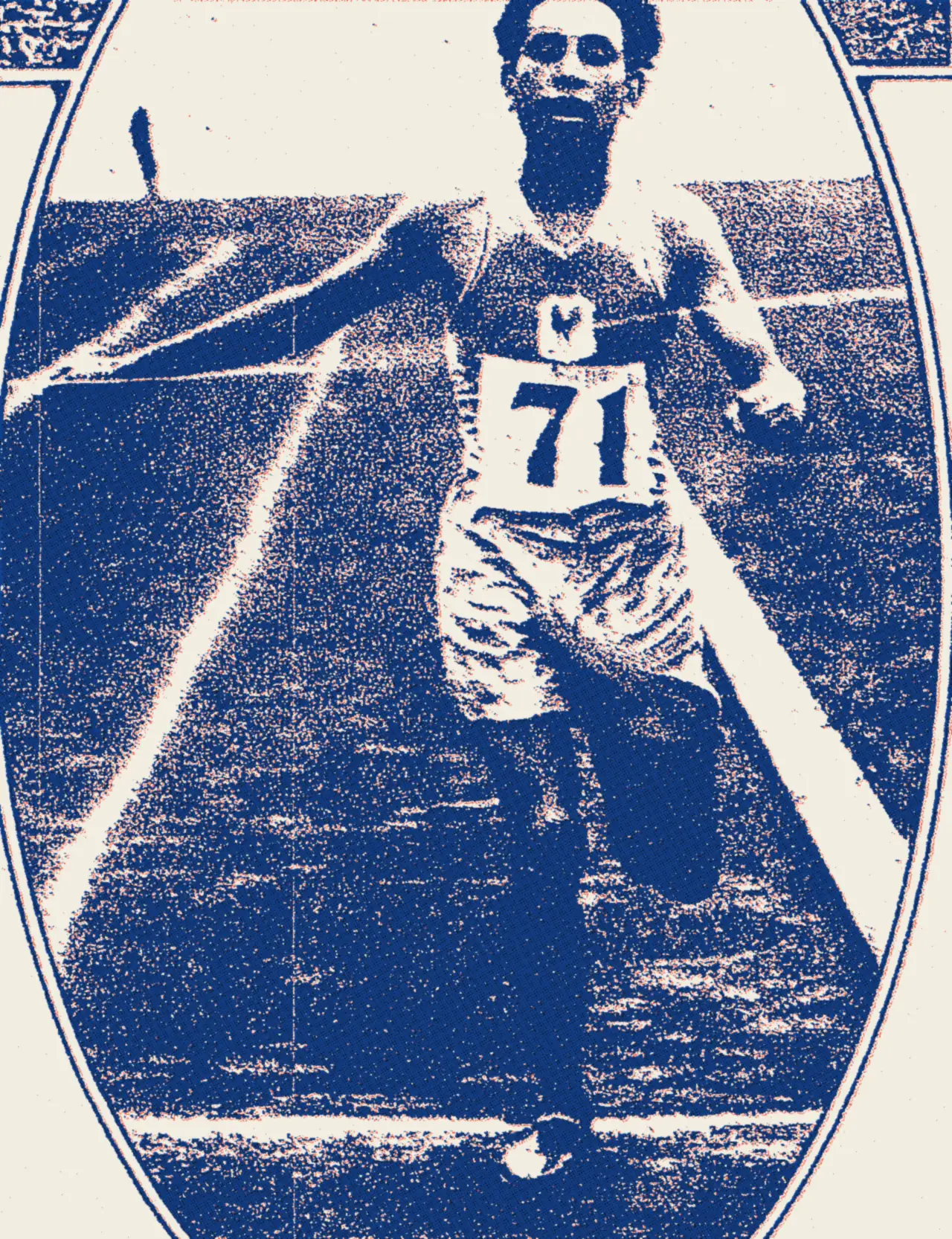
Boughera El Ouafi is born in Ouled Djellal, in what was then French Algeria, on October 15, 1898 according to most sources. World Athletics gives 1899, his death certificate 1903. He works as a laborer at the Renault factories in Billancourt and runs for CO Billancourt. At the 1924 Paris Games, he finished seventh in the marathon.
02Boughera El Ouafi in Amsterdam, August 5, 1928
Since then, he has competed very little, Olympedia writes. But in 1926, as a dispatch bearer for the French army in Morocco, he covered long distances in the desert, which kept him fit. In Amsterdam, again according to Olympedia, he stays behind the leaders for 35 km, accelerates in the last 5 and drops Chile's Manuel Plaza just before entering the stadium. He finishes the marathon in 2:32:57, 26 seconds ahead: 150 meters, writes the *New York Times*. Finland's Martti Marttelin takes bronze.
An Olympic champion wins a medal. He doesn't earn a living.
03The United States, and the amateurism trap
An Olympic champion wins a medal. He doesn't earn a living. So El Ouafi goes to run in the United States, in paid exhibitions. The dates of the tour vary from one account to another, so we leave them out. “I was a fool to agree to cross the Atlantic, but I don't know if you realize what it meant to me, a laborer at the Renault factories, to go to America!” he will tell the press, according to Le Courrier de l'Atlas. The rule of the day is clear: an amateur does not take money for his sport. He is struck off for professionalism and leaves athletics.
04A café, a partner
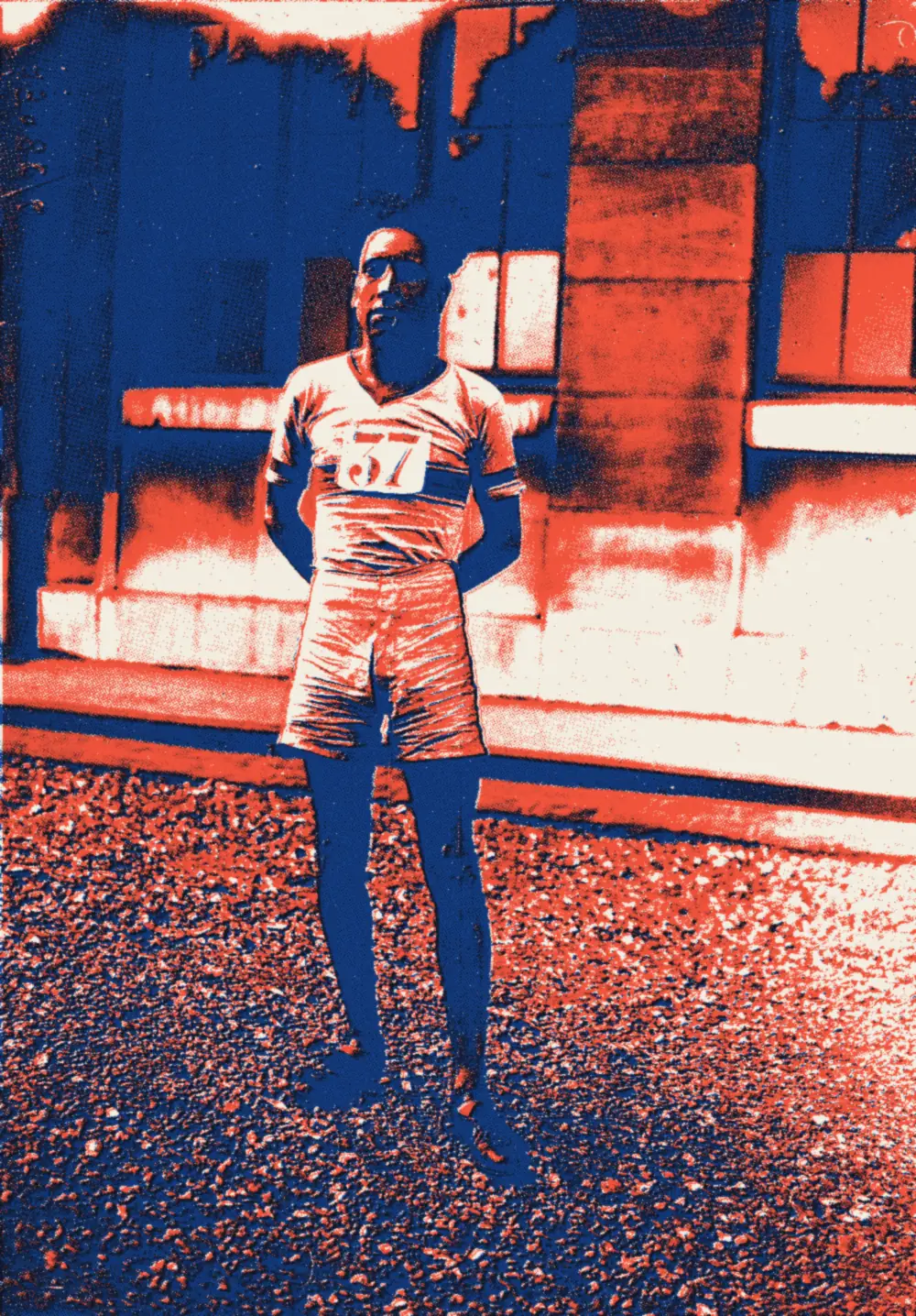
He puts his savings into a café in Paris. He loses them, swindled by a partner. In 1956, when Alain Mimoun in turn wins the Olympic marathon, in Melbourne, people finally remember him. Mimoun even asks that he be present at the reception held in his honor at the Élysée, Le Courrier de l'Atlas tells it.
05October 18, 1959
On October 18, 1959, in the middle of the Algerian War, Boughera El Ouafi is shot dead in a café in Saint-Denis. The circumstances remain unclear. Olympedia writes that he was killed by members of the FLN, after refusing to support them. Jasmine Zeroug, from his family, finds a settling of scores between Algerian independence movements more credible, in Le Courrier de l'Atlas. He rests in the Muslim cemetery of Bobigny.
Sources for this story (11)
Every fact was cross-checked in at least two independent sources. Where they disagree, the story says so.
- Marathon, Men, 1928 Summer Olympics — Olympedia
- Bouguera El Ouafi — Olympedia
- Boughera El Ouafi — Fédération française d'athlétisme (base biographique)
- Boughera El Ouafi — World Athletics
- Boughera El Ouafi — Encyclopædia Universalis (Pierre Lagrue)
- Boughera El Ouafi, sorti de l'oubli — Hommes & migrations (Yvan Gastaut, 2024)
- JO 1928 : la détermination de Jasmine pour sortir de l'oubli son grand-oncle — Le Courrier de l'Atlas (Nadir Dendoune, 2 novembre 2021)
- El Ouafi Boughera, prisonnier des temps — Finishers (2021)
- Boughera El Ouafi finishing Olympic marathon, 1928 — Wikimedia Commons (photo Underwood & Underwood, New York Times du 19 août 1928)
- Reggie Walker — Olympedia
- API Wikimedia Commons — licences des deux photos
Read next
The whole journal → No. 01
The 1904 Olympic Marathon: The Most Absurd Race in History
One runner covers part of the course by car, the winner runs on rat poison, and a Cuban mailman stops to eat apples. St. Louis, August 30, 1904: the 1904 Olympic marathon, where almost everything that could go wrong did.
 No. 02
54 Years, 8 Months and 6 Days: Shizo Kanakuri and the Slowest Marathon Ever
The slowest marathon time ever belongs to Shizo Kanakuri. In 1912 he vanished mid-race at the Stockholm Olympics. In 1967 he finally crossed the finish line. In between: 54 years, 8 months and 6 days, a Guinness record and six children.