Spiridon Louis, 1896: The Water Carrier Who Won the First Marathon
Spiridon Louis, a young Greek from Marousi, entered the Panathenaic Stadium on April 10, 1896, to a roaring crowd: he had just won the very first marathon in Olympic history. Since then he has been credited with a glass of wine, a shepherd's job and gifts by the cartload. Let's sort it out.
By the PacePoster desk · · 3 min · 20 sources
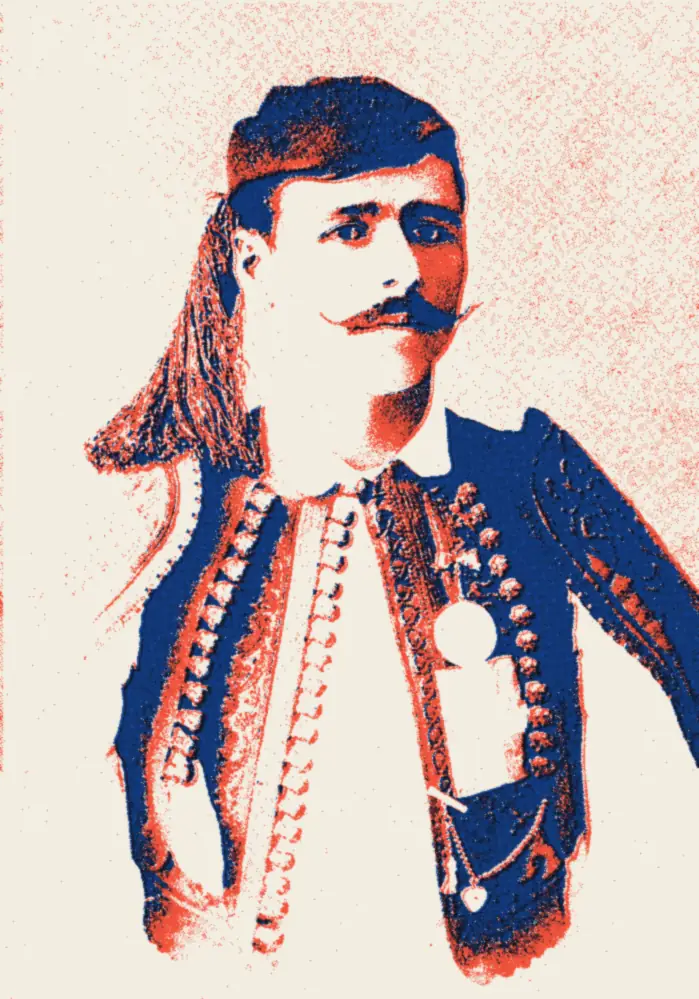
01A linguist's idea
There was never a marathon at the ancient Games. The event was born from a letter. On September 15, 1894, the linguist Michel Bréal wrote to Pierre de Coubertin: “Since you are going to Athens, see whether a Marathon race could be organized at the Pnyx.” He even asked, for his part, for “the honor of offering ‘the Marathon Cup’.” The pretext: the messenger who supposedly ran from Marathon to Athens in 490 BC to announce the victory over the Persians. Historians doubt the anecdote: Herodotus, who tells the story of the battle, does not say a word about it.
02Seventeen at the start, an Australian who collapses
There are 17 at the start, 13 of them Greek. The Frenchman Albin Lermusiaux leads early, then drops out. The Australian Edwin Flack, already the winner of the 800 m and the 1,500 m, takes over, then collapses at kilometer 37. Louis keeps working his way up over the kilometers. He takes the lead in the last ten: around kilometer 32 according to World Athletics, four kilometers from the finish according to the Olympic Museum. He enters the stadium in 2:58:50, more than seven minutes ahead of Charilaos Vasilakos. The course? About 40 km: no distance has been set yet.
He chose neither a house nor land, but a cart
03Was Spiridon Louis a shepherd or a water carrier?
Legend says shepherd. Olympedia, the big database of the Games, actually describes him as both a shepherd and a mineral water seller. The job that World Athletics and AIMS keep is water carrier: his father sold mineral water in Athens, and Spiridon hauled it in from Marousi. The movies settled it their own way: in It Happened in Athens, the 1962 Hollywood film, Spiridon is a young shepherd.
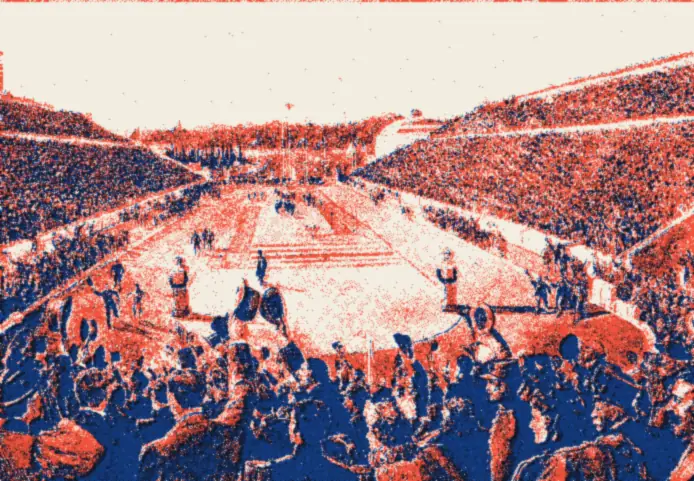
04Wine? More like cognac
The most persistent story: at Pikermi, Louis stops at a tavern for a glass of wine. His grandson, who bears the same first name, gives another version in an interview with the Vienna daily Kronen Zeitung, relayed by World Athletics in 2004: his girlfriend hands him half an orange, then his future father-in-law a glass of cognac, less than ten kilometers from the finish. Witnesses confirmed it several times, he says. That is the version World Athletics keeps today.
05What the king offered, what he took
The king reportedly let him choose his reward. He chose neither a house nor land, but a cart for his work, his grandson says: pulled by a horse according to World Athletics, by a donkey according to the Olympic Museum. Offers rain down, from jewelry to free shaves for life at a barber's; he turns down almost all of them. Bréal's cup stays in the family until 2012: the Stavros Niarchos Foundation buys it at auction at Christie's for £541,250.
Sources for this story (20)
Every fact was cross-checked in at least two independent sources. Where they disagree, the story says so.
- Marathon, Men, 1896 Athens Olympics — Olympedia
- Spyros Louis — Olympedia
- Spiridon Louis, 1896 Olympic marathon, 125th anniversary — World Athletics (2021)
- A Marathon legend revisited — World Athletics (2004)
- Michel Bréal (1832-1915): The man behind the idea of the marathon — The Sport Journal (Norbert Müller)
- Athens 1896: the invention of the marathon — Musée olympique / Google Arts & Culture
- Spyridon Louis — Musée olympique / Google Arts & Culture
- Exactly 42.195 kilometres — Musée olympique / Google Arts & Culture
- Spyridon Louis — Comité olympique hellénique
- Spiridon Louis — AIMS (Hugh Jones, 2018)
- Invention of the marathon — JSTOR Daily (Miriam Kamil, 2024)
- Spyridon Louis and his great marathon triumph — The New European (Charlie Connelly, 2021)
- April 10, 1896: Spyridon Louis wins first modern Olympic marathon — The Pappas Post
- Spyros Louis becomes the unlikely hero of the 1896 Olympic Games — Greek Herald
- Spyridon Louis — Greek City Times
- Spyridon Louis, héros malgré lui — La Libre Belgique (Angélique Kourounis, 2004)
- Marathon cup from 1896 sets Olympics auction record — Reuters, via Daily FT (2012)
- It Happened in Athens (1962) — AFI Catalog
- Marathon — Athens Authentic Marathon (organisateur)
- API Wikimedia Commons — licences des deux photos
Read next
The whole journal →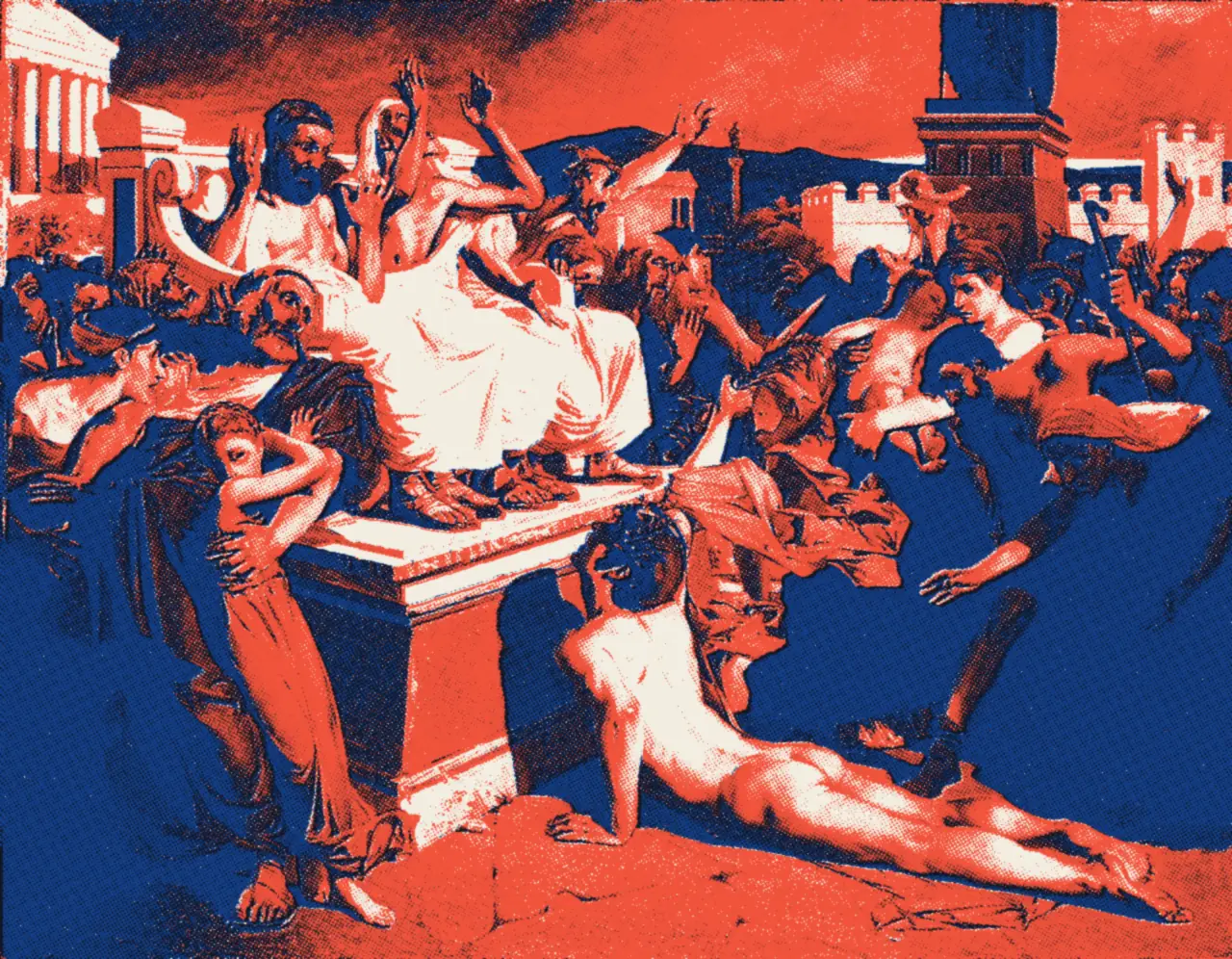 No. 40
The History of the Marathon: Pheidippides Ran to Sparta, Not Athens
The history of the marathon begins in 1896, at the first modern Olympic Games in Athens, from an idea by the linguist Michel Bréal. It rests on a legend: a messenger runs from Marathon to Athens, cries victory and drops dead in front of the magistrates. Except that Herodotus, the Greek historian who tells the battle, says nothing of the sort: his Pheidippides runs to Sparta, and comes back alive.
 No. 17
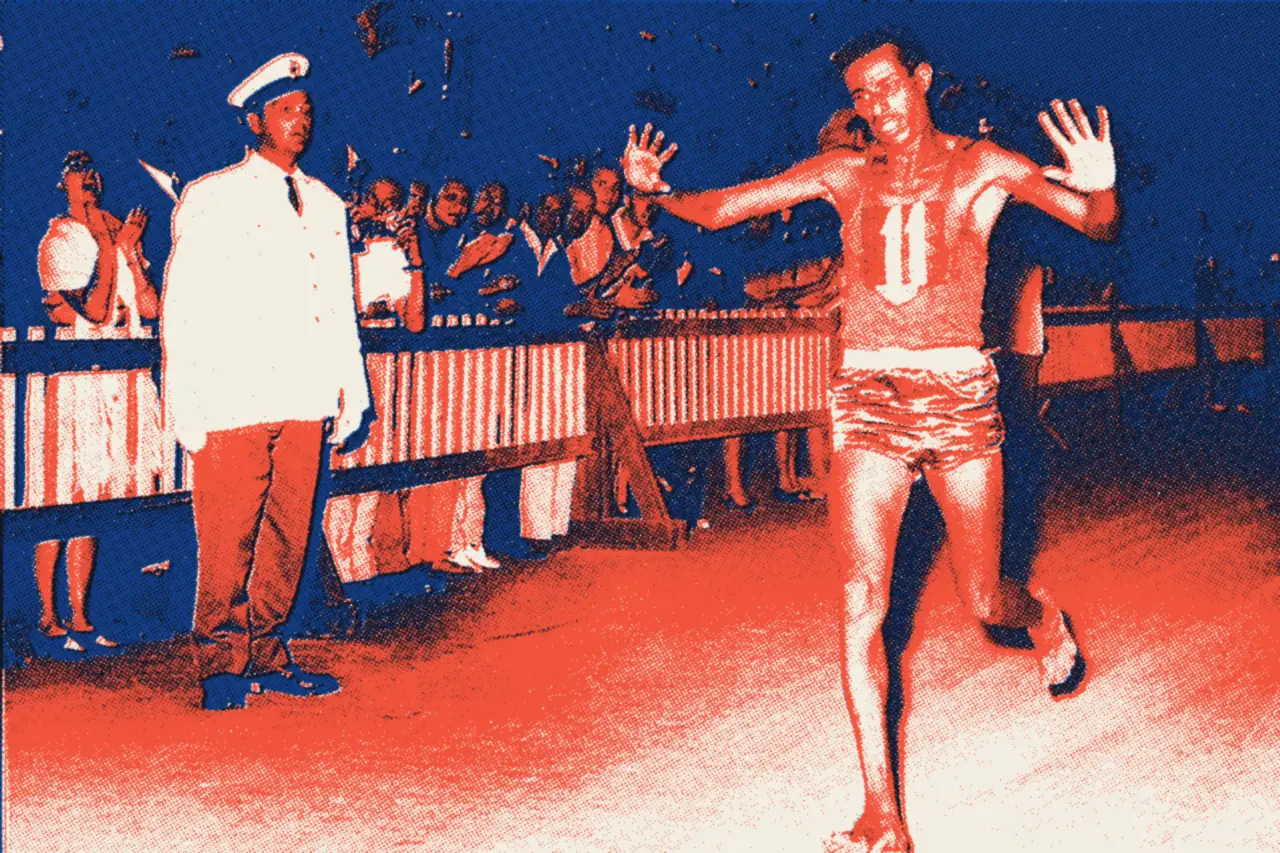
Abebe Bikila, Rome 1960: The Barefoot Marathon by Torchlight
Why did Abebe Bikila run barefoot? On September 10, 1960, a near-unknown Ethiopian sets off from Rome’s Capitoline Hill without shoes, and sources disagree on exactly why. Two hours later, Italian soldiers light with torches the road he is climbing back up in the lead, toward the Arch of Constantine. He has just broken the world record.